
Is something wrong right now? If your pet is struggling to breathe, has collapsed, is bleeding heavily, cannot pass urine, has a swollen hard abdomen, is having a seizure, has been hit by a car, or has swallowed something you think is poisonous, this is an emergency. Call us before you set off so we can be ready for you, and if we are closed call a 24-hour emergency hospital straight away. Do not wait to see whether it settles. Call 000-000-0000
The best time to think about the end of a life is while it is still mostly good, not in the week it is not. A quality-of-life assessment is a written, structured look at eating, mobility, comfort and the things your particular animal has always enjoyed, done while there is time to act on it rather than only react to it. Reviewing it every few months turns a decision most families otherwise make in a single frightening evening into one you have already been thinking about calmly, with facts in front of you rather than only fear.
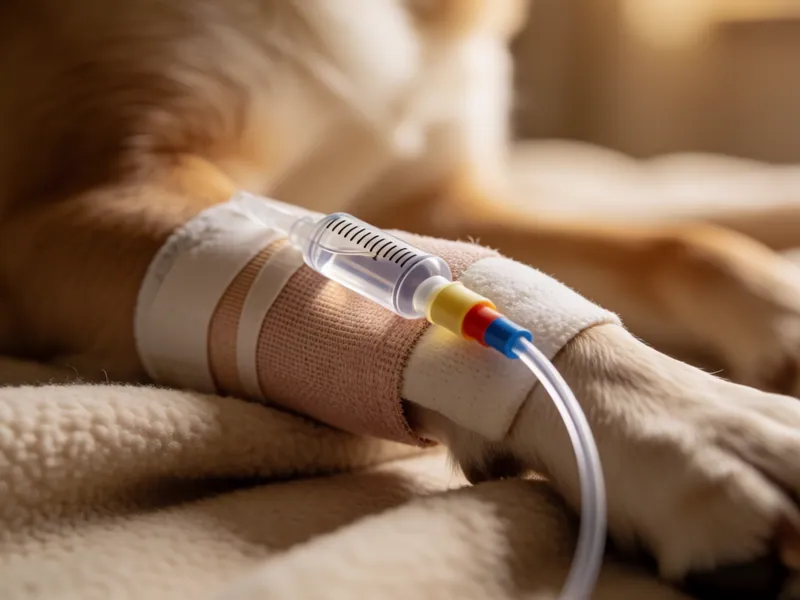
On the day itself, a veterinarian explains exactly what will happen before it happens, in plain language, and answers any question you ask however many times you ask it. A small intravenous catheter is placed first, usually in a front leg, which is often the part families find hardest to watch and also the part that takes the least time. Many animals are given a sedative first, so that what follows happens while they are already resting comfortably. A second injection then stops the heart, quickly and without pain, and a veterinarian confirms that your animal has died before saying so to you.
Most families choose the comfort room: a quiet space with a sofa and soft light, its own door onto the side street so you do not have to walk back out through a waiting room afterwards, and no time limit on any part of it. A home visit is also possible, for an animal calmer in familiar surroundings, or a family who would rather not travel on this particular day. You are welcome to stay for all of it, some of it, or none of it — there is no right amount — and aftercare, including cremation choices, is arranged afterwards, once you are ready.

Assessing quality of life, before it is urgent
The most useful version of this conversation happens weeks or months before the difficult one.
What a written quality-of-life assessment actually covers
A structured assessment looks at specific, concrete things — is your animal eating and drinking normally, moving comfortably, keeping clean, still interested in the people and routines it has always cared about, having more good days than bad — rather than one vague overall impression. Writing it down, and comparing it to the last one, turns a feeling of general decline into something you can actually track and discuss.
Reviewing it every few months, not once
A single assessment is a snapshot; reviewing it every few months, as our Senior Plan does twice a year, shows the direction things are actually moving in, which matters more than any single visit's result. Some animals plateau for a long time after a decline is first noticed; others change quickly. Only a series of honest look-backs tells you which one you are dealing with.
The question is not 'is it time' but 'what does a good day look like'
Defining what a good day actually looks like for your particular animal — interested in food, comfortable getting up, still seeking out a favourite spot in the sun — gives you a concrete, personal measure to check against, rather than an abstract sense that something has changed. When good days become the exception rather than the rule, that definition, written down in advance, does most of the difficult work for you.
Involving the whole family in one conversation
Different members of a household very often notice different things and reach different conclusions at different times, and that mismatch is one of the harder parts of this whole process. A joint conversation, ideally with a veterinarian present to answer questions plainly, tends to bring people to the same page faster and more gently than working it out separately at home.
There is no test that makes this decision for you
Bloodwork, imaging and a physical examination can tell you a great deal about what is happening inside your animal, but none of it can tell you, on its own, when your particular animal's quality of life has tipped. That judgement combines clinical findings with what you see every day at home, and it remains a conversation between you and a veterinarian, not a number on a form.
What actually happens on the day
Described plainly, because not knowing what to expect is its own kind of hard.
Booking the day itself
Most families book a specific day and time in advance, once a decision has been made, which lets us set aside proper time in the comfort room rather than fit it between other appointments. If your animal is in acute distress and the decision cannot wait, call us and we will see you as soon as we possibly can, the same as for any other urgent situation.
Arrival, and going straight to the comfort room
You are brought directly into the comfort room rather than through the general waiting area, so there is no sitting among other clients and other animals beforehand, and no crossing paths with anyone in the middle of an ordinary appointment. The room has a sofa, soft lighting, and its own door to the side street, and nobody will hurry you to begin once you are in it, whether that is a minute later or an hour later.
The sedative, then the second injection
For most animals a sedative is given first, so that what follows happens while they are already resting rather than alert to it. A small intravenous catheter placed beforehand means the second injection, which stops the heart quickly and without pain, can be given smoothly once you are ready, not before. A veterinarian stays throughout and confirms, gently and honestly, once it is over.
Staying, or not staying
Some owners stay for every moment, some leave before the second injection and come back afterwards to say goodbye, and some prefer not to be in the room at all — all three are common, and none of them is treated as the wrong choice. Tell us in advance what you think you want, and know that you can change your mind on the day itself without any explanation needed.
What happens immediately afterwards
Your animal is handled gently and moved to a private area away from the comfort room once you are ready to leave, and you are free to leave by the side door without walking back through reception. Aftercare arrangements, including which cremation option you would like, can be decided beforehand, on the day, or afterwards by phone — whichever order feels manageable to you.
Aftercare, home visits, and the practical questions
The practical side of this is handled quietly, so it never has to compete with the rest of it.
Aftercare choices
Options generally include private cremation, with your animal's ashes returned to you afterwards, or communal cremation without individual ashes returned, and, where local rules allow it, home burial. We will explain each option plainly, without steering you toward the more expensive one, and there is no obligation to decide immediately — this can be arranged by phone in the days that follow if that is easier.
Home visits
A home visit can be arranged for an animal who finds travel distressing, or for a family who would simply rather this happened somewhere familiar. The same unhurried process applies — sedation, an intravenous line, a gentle second injection, and time with no clock on it — carried out wherever your animal is most comfortable, usually a favourite room or a garden.
How paying for this is handled
We will settle the practical side of payment before or after, whichever you prefer, and never in the middle of it — this is one appointment where the invoice is deliberately kept out of the room until you are ready to think about it. Ask the desk in advance if you would rather have that conversation before the day itself so it is entirely out of the way.
Afterwards
Many clients receive a card from the team who knew their animal, and a follow-up call in the days after is normal practice, not an intrusion — feel free to say if you would rather not have one. Your animal's file is closed gently and permanently, and there is nothing further you need to do unless you choose to reach out.
If you are not sure yet
You do not need to have decided anything to call and talk this through, including whether it is the right time at all, or whether it ever will be today. We would rather have that conversation with you, however uncertain, than have you work through it alone — call us, and we will make time to talk properly rather than rush you off the phone.
Hospice & End-of-Life in western Queens
Quality-of-life assessment while there are still good days, a private comfort room with its own exit and no time limit, home visits, and honest answers about what happens on the day.
It starts the same way whatever you are here for: a full examination with time to talk, what we found explained in plain English, and a written estimate for anything beyond the consultation before it happens. You are entitled to take that estimate away and think about it, and to ask what happens if you do nothing. That last one is a real question and it gets a real answer.

This is general information, not veterinary advice. This page describes a service. It is general information and it is not veterinary advice, a diagnosis or a treatment plan for any particular animal, because no page can examine your pet. If your animal is unwell, injured or behaving unusually, speak to a licensed veterinarian who can actually see it. In an emergency contact your own veterinarian or a 24-hour emergency animal hospital immediately.
Questions
Hospice & End-of-Life — the questions we are asked most
How do I know it is time?
There is no formula that decides this for you, and we would be lying if we offered one. What helps is a written quality-of-life assessment, reviewed every few months rather than only in a crisis, looking honestly at eating, mobility, comfort and whether your animal is still having more good days than bad. When you feel that balance has genuinely tipped, call us and talk it through — you do not have to reach a firm conclusion alone before you call.
What actually happens during euthanasia?
A small intravenous catheter is placed first, usually in a front leg. Many animals are given a sedative so that what follows happens while they are already resting. A second injection then stops the heart quickly and without pain, and a veterinarian confirms, gently, once it is over. Every step is explained before it happens, and we will answer any question you ask, as many times as you need to ask it.
Can I stay with my animal throughout?
Yes, for all of it, some of it, or none of it, whichever you prefer — all three are common choices and none is treated as wrong. Tell us in advance what you think you want, and know you are free to change your mind on the day itself. The comfort room has no time limit before or after, so nobody will hurry you at any stage.
Do you offer home visits?
Yes, for an animal who finds travel distressing or a family who would rather this happened somewhere familiar. The same unhurried process applies wherever it takes place — sedation, an intravenous line, and a gentle second injection, with no clock running on any part of it. Call us to arrange one and to talk through what to expect at your own address.
What happens to my animal afterward — what are the aftercare options?
Options generally include private cremation with your animal's ashes returned to you, communal cremation without individual ashes returned, or home burial where local rules allow it. We will explain each plainly and without pushing you toward the costlier option, and you do not have to decide immediately — this can be arranged afterwards by phone if that feels easier on the day itself.
How much does euthanasia cost?
We do not list a fixed price, because it depends on your animal's size, whether you choose the comfort room or a home visit, and your choice of aftercare, and we would rather give you the real figure once we know those things than print a number that will not be right for your animal. You will always know the figure before anything happens, discussed with you in person rather than left as a surprise on an invoice.
Can my children be there?
That is entirely your decision, and there is no right answer we would push you toward either way. Some families find it helps a child understand what has happened rather than simply disappear; others prefer to explain it afterwards in their own words and their own time. Whatever you decide, the comfort room and the pace of the appointment stay exactly the same.
I am not ready to decide yet — can I still call?
Yes, and you do not need a booking or a firm decision to do it. We would rather talk it through with you, including genuine uncertainty about whether it is even the right time, than have you work through it alone at home. A written quality-of-life assessment, done well before anything feels urgent, is often the most useful next step, and it commits you to nothing beyond that conversation.
Related
Usually booked alongside this
Urgent & Comfort Care
Urgent Care
Same-day appointments held back every day for an animal that was well yesterday and is not well today, with plain guidance on the signs that mean call now rather than wait.
Read more
Urgent & Comfort Care
Anaesthesia & Monitoring
Continuous ECG, blood pressure, oxygen and temperature monitoring on every anaesthetic, watched by a named technician whose only task for that hour is your animal, with active warming throughout.
Read more
Urgent & Comfort Care
Pain Management
Animals hide pain and owners under-report it, so we look for it directly rather than wait to be told, then build a multimodal plan reviewed over time, not left unchanged for years.
Read moreA written estimate before anything is booked
Book an appointment
We hold same-day appointments back on every single day of the week for animals that were well yesterday. Call the practice and describe what you have noticed, and the desk will book you at the right speed rather than the soonest one.