Is something wrong right now? If your pet is struggling to breathe, has collapsed, is bleeding heavily, cannot pass urine, has a swollen hard abdomen, is having a seizure, has been hit by a car, or has swallowed something you think is poisonous, this is an emergency. Call us before you set off so we can be ready for you, and if we are closed call a 24-hour emergency hospital straight away. Do not wait to see whether it settles. Call 000-000-0000
Pet dental cleaning in Woodside, NY starts with a plain fact most owners have never been told: a dental cleaning that consists of scaling visible tartar off the crown of each tooth treats the part of the mouth that was never diseased in the first place. Periodontal disease develops under the gum line, in the socket holding the tooth, and no amount of scraping above the gum touches it. Our dental suite — see /facility.html for the rest of the building — exists because of that fact: full-mouth digital dental radiography, taken under anaesthetic, before a scaler goes anywhere near a tooth.
The visit itself has two prices because it is genuinely two decisions. A dental examination and estimate is $75 — an awake assessment of the gum line, visible tartar and any mobile or discoloured teeth, ending in a written estimate for what we expect the anaesthetic to find. The anaesthetic scale and polish is $495 for a cat and $545 to $795 for a dog, priced by weight, and includes the anaesthetic itself, the full-mouth radiographs, ultrasonic scaling above and below the gum line, polishing, and continuous monitoring for the whole procedure.
An anaesthetic is not an optional upgrade to a dental cleaning; it is the only way to do one properly. Radiographing and probing under the gum line cannot be done in an animal that is awake, and a cleaning that skips both is cosmetic — the mouth looks better in a photograph and the disease underneath is untouched, sometimes worse, because tartar and bacteria have been pushed under the gum rather than removed. Dr. Sofia Vargas, who built this dental service, puts it plainly: a mouth that looks fine from the front is not the same thing as a mouth that is fine.
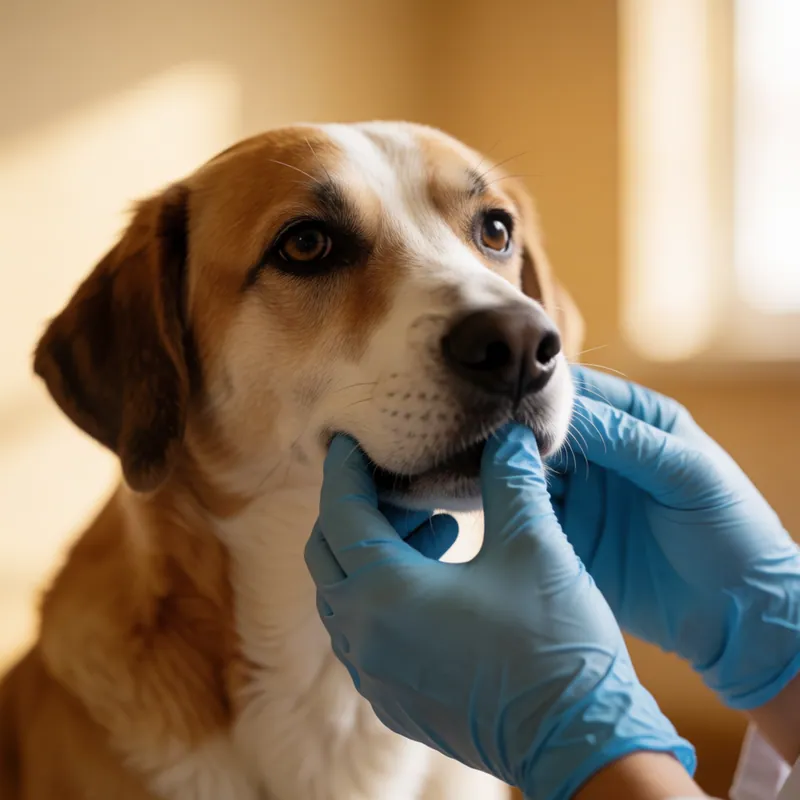
What happens during a dental cleaning here
The same sequence runs for every patient, cat or dog, regardless of how straightforward the mouth looks at the awake examination.
The awake examination and estimate
You get a look at the gum line, visible tartar, and any teeth that already look mobile, cracked or discoloured, with a written estimate for the anaesthetic dental that follows. This is the $75 appointment, and it is where we decide whether your animal's bloodwork needs updating before an anaesthetic date is booked, particularly for an older cat or dog.
Full-mouth digital dental radiographs
Every tooth, root and the bone around it, imaged under anaesthetic before any scaling starts, using the same dental x-ray system that lets us see structures no examination alone can reach. Roughly half of dental disease sits below the gum line, where an awake examination cannot reach it, so a dental performed without radiographs is a dental performed blind to half of what might be there, however clean the crowns look afterwards. The images are kept permanently against your animal's file.
Ultrasonic scaling, above and below the gum line
The visible tartar on the crown is the easy part. The scaling that actually changes the disease process happens just under the gum line, in the pocket where bacteria live against the root, and it is done with the animal anaesthetised and its airway protected, not with a hand scraper on a nervous animal held on a table. An ultrasonic scaler vibrates tartar loose without gouging the tooth surface the way a hand instrument can, and every quadrant of the mouth gets the same careful attention.
Polishing
Scaling roughens the enamel slightly even when it is done well, and a roughened tooth collects plaque faster than one that was never scaled at all. Polishing smooths the surface back down afterwards, which is a small step that is easy to skip and makes a measurable difference to how quickly tartar returns. It takes only a few extra minutes once scaling is finished, and it is included in every scale and polish rather than treated as a separate add-on.
Monitoring, from induction to standing
Continuous ECG, blood pressure, oxygen saturation, capnography and temperature, watched by Tomas Brennan or one of our other anaesthesia technicians, whose only task for that hour is your animal, with active warming running throughout because an anaesthetised animal loses heat quickly and a cold animal recovers badly. The same standard runs for a fifteen-minute cat scale and a longer dog dental with several extractions.
Why this needs a general anaesthetic, and what 'anaesthesia-free' actually is
An anaesthetic dental and a cosmetic scrape are not two versions of the same service.
What an anaesthetic actually allows
A still animal, a protected airway, and enough time to probe every tooth, take a full-mouth radiograph series, and scale below the gum line where the disease actually lives. None of that is possible in an animal that is awake, however calm, and rushing it to avoid an anaesthetic produces a worse examination, not a safer one. The time an anaesthetic buys is spent on the mouth, not on restraint, which is why an anaesthetic dental typically takes longer than owners expect and finds more than a quick look ever could.
'Anaesthesia-free dental' is a cosmetic scrape, not a dental cleaning
Scaling the visible crown on a conscious animal removes tartar you can see and does nothing below the gum line, where periodontal disease actually progresses. It cannot include a radiograph, cannot include subgingival scaling, and routinely pushes tartar and bacteria further under the gum during the scraping. We do not offer it, because a mouth that looks better and is not actually healthier is a worse outcome than an honest answer that a dental is not due yet.
The pre-anaesthetic work-up
An examination and, for an older or higher-risk animal, an in-house blood panel before the anaesthetic date, so anaesthetic drugs and monitoring can be matched to what we actually find rather than assumed. A young, healthy cat and an eleven-year-old dog with early kidney values are not anaesthetised the same way, and the work-up is what tells us the difference.
The safety side, made specific rather than promised
A dedicated technician on every anaesthetic, continuous multiparameter monitoring, and active warming from induction to standing — the same standard whether the procedure is a straightforward cat scale or a dog needing several extractions found on the day. We are glad to walk you through exactly what is watched and why before you consent to anything. That includes heart rate and rhythm, oxygen level, blood pressure, breathing and body temperature, each tracked continuously rather than checked periodically and hoped to still be true a few minutes later.
Recovery and going home
Most dental patients go home the same day, groggy for a few hours and typically eating again by the next meal. You leave with a written note of what the radiographs showed, whether anything was extracted, and pain relief to take home, plus a plan for when the next dental is likely to be due rather than a vague 'see you next year.'
What we actually find, and how it changes what happens next
The radiographs decide the plan on the day, not the plan we wrote at the awake examination.
A mouth that looks fine from the front
It is common to open a set of full-mouth radiographs on a cat or dog with unremarkable-looking front teeth and find a resorptive lesion, a dead root, or bone loss around a back tooth that no owner could have seen or smelled. This is the entire reason the radiographs happen before, not instead of, the visible cleaning. Owners are usually surprised by the image itself, less by the fact that something was found, once they see how far below the gum line the actual problem sits.
If we find a tooth that needs to come out
We call before we extract anything beyond what your original estimate covered, describe what the radiograph showed, and give you a revised price for a simple or surgical extraction before proceeding. Our /dental-surgery.html page covers extractions and oral surgery in detail, including why an animal almost always eats better afterwards, not worse. You decide before we go any further than the plan you already agreed to, and the anaesthetic your animal is already under is what makes treating it the same day possible rather than a second procedure later.
A record you can compare year to year
Every dental is charted against the same numbering system and kept with your animal's file, so a radiograph taken this year can be compared directly with the one taken two years ago rather than read cold. That comparison is often what tells us a mouth is stable on a yearly interval or sliding faster than expected. It also means a new veterinarian seeing your animal for the first time can pick up the same chart and understand the history immediately, rather than starting from nothing.
Why the interval is not the same for every animal
Small and toy-breed dogs, and brachycephalic breeds of any size, tend to need dentals more often than large dogs of the same age, because they are simply more crowded for the amount of jaw they have. We will tell you honestly what interval your particular animal seems to be on rather than apply one rule to every mouth. A large-breed dog might go two years between dentals; a small terrier crowded with adult teeth in a jaw built for a puppy's mouth can need one every year.
What you can watch for between visits
Bad breath, pawing at the face, dropping food, or reluctance to chew on one side are all worth a call rather than a wait. None of them are a reason to guess at home what is wrong — they are a reason to book the awake examination and let a radiograph answer the question properly. Owners often mention one of these signs almost as an afterthought at an unrelated appointment, and it is usually the detail that turns out to matter most.
Dental Cleaning in western Queens
Full-mouth digital dental radiographs before every scale and polish, because the disease that actually matters sits below the gum line where an examination alone cannot see it. From $75 for the dental examination and estimate.
It starts the same way whatever you are here for: a full examination with time to talk, what we found explained in plain English, and a written estimate for anything beyond the consultation before it happens. You are entitled to take that estimate away and think about it, and to ask what happens if you do nothing. That last one is a real question and it gets a real answer.
This is general information, not veterinary advice. This page describes a service. It is general information and it is not veterinary advice, a diagnosis or a treatment plan for any particular animal, because no page can examine your pet. If your animal is unwell, injured or behaving unusually, speak to a licensed veterinarian who can actually see it. In an emergency contact your own veterinarian or a 24-hour emergency animal hospital immediately.
Questions
Dental Cleaning — the questions we are asked most
How much does a dental cleaning cost for my dog or cat in Woodside, NY?
The dental examination and estimate is $75, and it is an awake assessment that ends with a written estimate for the anaesthetic dental itself. The anaesthetic scale and polish is $495 for a cat and $545 to $795 for a dog, priced by weight, and includes the anaesthetic, full-mouth dental radiographs, ultrasonic scaling, polishing and monitoring. Any extraction found on the day is quoted separately, from $85 for a simple extraction, before it is done.
Why does my pet need general anaesthesia for a dental cleaning?
Because the parts of a dental that actually matter — probing each tooth, taking full-mouth radiographs, and scaling below the gum line — cannot be done in an animal that is awake, however calm it is on the table. An anaesthetic gives us a still animal, a protected airway and enough time to do the job properly, monitored continuously from induction to standing.
What is anaesthesia-free dental cleaning, and do you offer it?
We do not. Anaesthesia-free dental cleaning scales the visible tartar off the crown of a conscious animal, which can make a mouth look better in a photograph while doing nothing for the disease below the gum line, where periodontal disease actually lives. It cannot include a radiograph or subgingival scaling, and it can push tartar and bacteria further under the gum. We would rather tell you a dental is not due yet than offer a cosmetic version of one.
Why do you take x-rays if my pet's teeth look clean?
Because clean-looking crowns tell you nothing about the root or the bone around it, and roughly half of dental disease sits below the gum line where an examination cannot see it. We have opened full-mouth radiographs on animals with unremarkable front teeth and found a dead root or a resorptive lesion that no owner could have known about. The radiograph is what actually finds the disease; the visible cleaning is only ever half the job.
How do I know if my dog or cat needs a dental cleaning?
Bad breath, visible tartar, red or receding gums, dropping food, or reluctance to chew on one side are all reasons to book the $75 examination and estimate. Some animals show none of these and still have disease brewing below the gum line, which is exactly why the interval matters more than waiting for a visible sign — we will tell you honestly where your particular animal seems to sit.
Is anaesthesia safe for an older cat or dog having a dental?
It is managed specifically for the animal in front of us rather than treated as routine. Older or higher-risk animals typically get an in-house blood panel before the anaesthetic date, and every anaesthetic, whatever the animal's age, is monitored continuously with active warming running throughout. Age on its own is not a reason to avoid a dental; an undiagnosed painful mouth is a worse outcome than a properly managed anaesthetic.
What happens if you find a problem tooth during the cleaning?
We stop, call you, and describe exactly what the radiograph showed before extracting anything beyond your original estimate. Simple extractions start from $85 and surgical extractions — where a flap and sectioning are needed — start from $180, both quoted per tooth before the work is done. Our dental surgery page covers what that actually involves and why most animals eat better afterwards, not worse.
How often does my pet actually need a dental cleaning?
It depends on the animal rather than a fixed age or a calendar year. Small and toy-breed dogs and brachycephalic breeds of any size tend to need dentals more often than large dogs, because they carry the same number of teeth in a smaller jaw. We chart every dental against the same record so we can compare year to year and tell you honestly whether your animal's mouth is stable on its current interval or moving faster than expected.
Related
Usually booked alongside this
Surgery & Dentistry
Extractions & Oral Surgery
Simple and surgical extractions priced and explained before anything is removed, feline resorptive lesions found on radiograph rather than guessed at, and the plain truth that most animals eat better once a painful tooth is gone.
Read more
Surgery & Dentistry
Spay & Neuter
Cat and dog spay and neuter surgery priced by weight and species, timed to your particular animal's breed and size rather than a fixed age, with anaesthetic monitoring, pain relief to go home and the post-operative check all included.
Read more
Surgery & Dentistry
Soft Tissue Surgery
Lump removal and wound repair carried out here, with an honest line drawn at what genuinely needs a referral practice, a written estimate before anything goes to theatre, and histopathology sent on every mass we remove.
Read moreA written estimate before anything is booked
Book an appointment
We hold same-day appointments back on every single day of the week for animals that were well yesterday. Call the practice and describe what you have noticed, and the desk will book you at the right speed rather than the soonest one.