Is something wrong right now? If your pet is struggling to breathe, has collapsed, is bleeding heavily, cannot pass urine, has a swollen hard abdomen, is having a seizure, has been hit by a car, or has swallowed something you think is poisonous, this is an emergency. Call us before you set off so we can be ready for you, and if we are closed call a 24-hour emergency hospital straight away. Do not wait to see whether it settles. Call 000-000-0000
Orthopaedic surgery here covers three problems more than any others: cruciate ligament disease in the knee, patellar luxation — a kneecap that slips out of its groove — and fracture repair after an injury. All three are diagnosed properly before anything is scheduled: a gait assessment, a hands-on orthopaedic examination, and radiographs of the joint or bone in question, because treating a limp on assumption alone is how the wrong problem sometimes gets operated on. Dr. Nikhil Raman, our Head of Surgery — see /team.html — leads this service and reviews every orthopaedic case personally before a plan is proposed.
Weight is not a footnote in an orthopaedic treatment plan — it is roughly half of it. A dog carrying extra weight puts measurably more load through a repaired cruciate ligament or a corrected kneecap with every step, and a weight management plan started alongside surgery, not after it, changes how well that repair holds up over the following years. We will talk about your animal's weight as part of the orthopaedic consultation itself, honestly and without embarrassment, because it is one of the few parts of the outcome that is actually within an owner's control.
We are honest about where our own threshold sits. Straightforward patellar luxation corrections, extracapsular cruciate stabilisation in smaller and lighter dogs, and fracture repairs we are equipped to manage are carried out here. More complex fractures, joint reconstructions, and procedures that need equipment or a caseload we do not carry are referred to a practice set up specifically for that work, and we stay involved afterwards rather than stepping out of the picture once the referral letter is sent. Which category your animal falls into is decided by the radiograph, not by a preference to keep the case in-house.
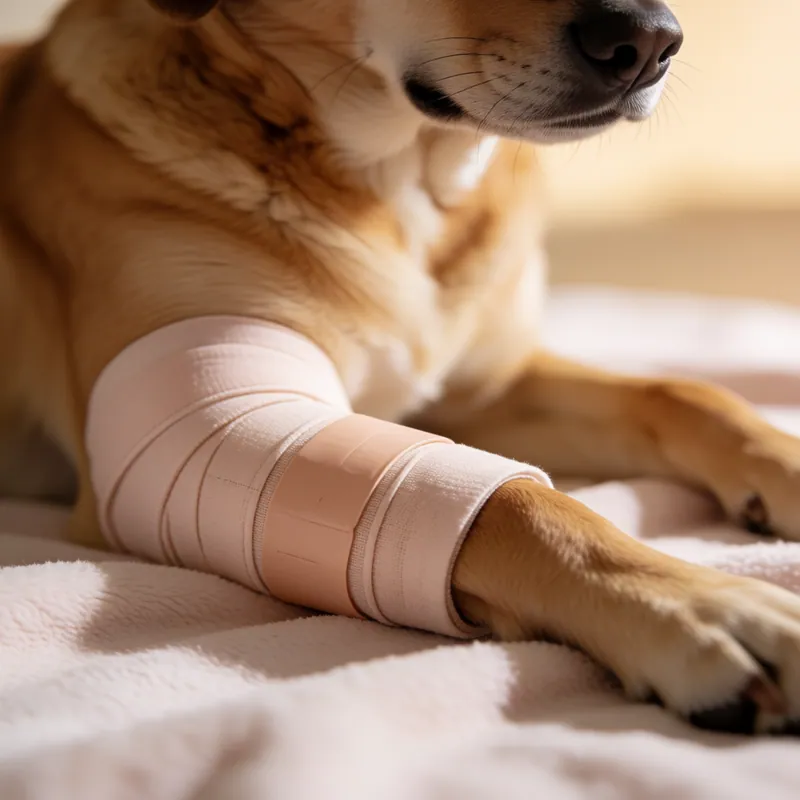
The three problems that make up most orthopaedic surgery here
Each is diagnosed properly before anything is scheduled, and each is treated differently depending on size, severity and the animal in front of us.
Cruciate ligament disease
A torn or degenerating cruciate ligament in the knee is one of the most common causes of hind-leg lameness we see, and it very often affects the second knee within a year or two of the first. Extracapsular stabilisation, a technique suited to smaller and lighter dogs, is carried out here; larger and more athletic dogs are more often referred for a bone-cutting technique better suited to their size and activity level.
Patellar luxation
A kneecap that slips in and out of its natural groove, graded from one to four by severity, causing anything from an occasional skip in the stride to a permanently bent leg at the higher grades. Surgical correction realigns the groove and the surrounding soft tissue, and is priced individually once the grade and the dog's size are known. Small and toy breeds are affected more often than large dogs, and both knees are often affected even when only one causes an obvious limp.
Fracture management
Straightforward fractures — a clean break in a limb bone we are equipped to stabilise with pinning or an external fixator — are managed here, decided entirely by what the radiograph shows rather than by hope. Complex fractures involving a joint surface, multiple fragments, or a bone we are not set up to plate safely are referred, usually the same day.
The examination that decides all three
A gait assessment watching your animal walk and trot, a hands-on orthopaedic examination feeling for pain, swelling, instability or crepitus in the joint, and radiographs of the affected area, before any treatment plan is written. This is what tells us which of the three problems, or occasionally something else entirely, we are actually looking at. Some lameness turns out to be neurological or muscular rather than orthopaedic at all, which is exactly why the examination looks at the whole animal rather than only the leg that is limping.
Why radiographs come before a plan, not after
A limp can come from the hip, the knee, the back or a soft tissue injury, and treating the wrong one is a real risk of skipping the imaging step. The radiograph is what confirms cruciate disease, grades a luxating patella, or shows a fracture's exact pattern, and the treatment plan follows what it actually shows. Sedation is usually needed to get a clear, correctly positioned image of a joint, which is a small part of the same anaesthetic used for surgery on the days the two happen together.
Weight management: half the treatment, not an afterthought
The surgery repairs the joint or the bone. What happens afterwards decides how well that repair actually lasts.
Why weight matters this much
Every extra kilogram a dog carries increases the load travelling through a repaired knee or a healing fracture with each step, and that load is exactly what a surgical repair is trying to withstand while it heals and afterwards. A lighter dog on the same repair simply asks less of it, for the rest of that dog's life. This is true whether the surgery happened last month or five years ago, which is why the weight conversation does not end at the post-operative check.
When the weight conversation happens
At the orthopaedic consultation itself, alongside the diagnosis, not as an afterthought mentioned on the way out the door once surgery is booked. We would rather have an honest conversation before surgery than have an owner discover afterwards that the plan depended on a change nobody mentioned clearly. Technicians are available for weight checks and diet questions at any point afterwards too, without needing to book a full consultation each time.
What a weight and mobility plan actually involves
A target weight based on your animal's frame rather than a chart figure, a feeding plan, and a structured, gradually increasing exercise routine once the surgical recovery period allows it. Technician weight checks are free at any time, which makes tracking progress between formal visits easy rather than another appointment to book. Progress is measured in what the dog can actually do — stairs, longer walks, getting into the car unaided — rather than the number on the scale alone.
Why this matters more after cruciate surgery specifically
A dog that regains excess weight after cruciate surgery on one knee measurably raises the load on the other, already vulnerable, knee — one of the reasons a second cruciate injury within a year or two is common. Weight management after this specific surgery is not optional extra care; it is protecting the knee that has not yet failed. We raise this specifically at the post-operative check for exactly this surgery, rather than folding it into a generic recovery conversation that applies to every procedure equally.
It is never too late to start
Whether your dog is newly diagnosed, recovering from surgery, or years past an orthopaedic procedure, a weight and mobility review is worth having at any point. We would rather adjust a plan that has drifted than have you assume the surgery itself was supposed to be the whole answer. A dog five years out from a cruciate repair, now carrying extra weight, benefits from the same conversation as a dog three weeks post-surgery, and it is never too awkward to bring it up again.
Referral thresholds, and being honest about them
Some orthopaedic cases genuinely belong at a practice that does nothing else, and we would rather tell you that plainly than take on a case we are not the right fit for.
What is carried out here
Extracapsular cruciate stabilisation in smaller and lighter dogs, patellar luxation correction across most grades, and fracture repairs using pinning or external fixation where the break is straightforward enough for that technique to be the right one. All are carried out in one of our two surgical theatres — see /facility.html — with Tomas Brennan or one of our other anaesthesia technicians monitoring continuously, the same standard as every other procedure in the practice.
What gets referred, and why
Cruciate repair in larger, heavier or more athletic dogs, where a bone-cutting technique suits the joint mechanics better than the technique we perform here; complex or multi-fragment fractures; and joint reconstructions needing equipment we do not carry. None of these are cases we would attempt to stretch into — the size and complexity genuinely call for a different setup. Body weight, not breed name alone, is usually what decides this for cruciate cases, since a heavy mixed-breed dog and a light purebred of a 'large' breed can sit on opposite sides of that line.
How a referral actually works
We arrange it, send your animal's full radiographs and history ahead of the appointment, and stay in contact with the receiving practice rather than handing you a phone number and stepping back. Most families return to us afterwards for the ongoing weight management, rehabilitation and general care, and we would rather keep that relationship than pretend to a capability we do not have.
Why the threshold is set by the case, not the calendar
We do not take on a complex fracture because the diary happens to be quiet, and we do not refer a straightforward one because a specialist appointment happens to be available. The decision is made from the radiograph and the animal in front of us, the same way every time, regardless of how convenient either answer would be for us.
Getting a second opinion on an orthopaedic recommendation
A second opinion consultation includes a full review of existing radiographs and any recommendation you have already been given, whether that recommendation came from us or elsewhere. We will tell you plainly if we agree, and equally plainly if we think a different path, including referral, is the better one for your animal. This costs $110 and is worth having before committing to a surgery date, particularly for a procedure as significant, and as individually priced, as most orthopaedic work is.
Orthopaedic Surgery in western Queens
Cruciate disease, patellar luxation and fracture management, with an honest line drawn at what we treat here and what needs a referral practice, and weight management treated as half of every orthopaedic treatment plan, not an afterthought.
It starts the same way whatever you are here for: a full examination with time to talk, what we found explained in plain English, and a written estimate for anything beyond the consultation before it happens. You are entitled to take that estimate away and think about it, and to ask what happens if you do nothing. That last one is a real question and it gets a real answer.
This is general information, not veterinary advice. This page describes a service. It is general information and it is not veterinary advice, a diagnosis or a treatment plan for any particular animal, because no page can examine your pet. If your animal is unwell, injured or behaving unusually, speak to a licensed veterinarian who can actually see it. In an emergency contact your own veterinarian or a 24-hour emergency animal hospital immediately.
Questions
Orthopaedic Surgery — the questions we are asked most
How much does orthopaedic surgery cost for a dog or cat in Woodside, NY?
It depends on the specific problem, your animal's size, and how severe the case is, which is why we do not publish a single flat number for orthopaedic work the way we can for a spay or a dental. A patellar luxation correction typically starts from around $1,450 and cruciate ligament stabilisation from around $1,950, both confirmed exactly after an orthopaedic consultation and radiographs, and always quoted in writing before surgery is booked.
What is cruciate ligament disease, and how is it treated?
It is a tear or gradual breakdown of one of the ligaments that stabilises the knee, and it is one of the most common causes of hind-leg lameness we see. Smaller and lighter dogs are commonly treated here with extracapsular stabilisation; larger or more athletic dogs are more often referred for a bone-cutting technique that suits their size and activity level better. Either way, the second knee is worth watching closely afterwards, because it is a common site for a second injury.
What is patellar luxation, and does my dog need surgery for it?
It is a kneecap that slips out of its natural groove, graded from one to four by severity — a mild grade one may need nothing more than monitoring and weight management, while a higher grade causing a consistently bent leg usually needs surgical correction. We grade your dog's specific knee at the orthopaedic consultation and tell you honestly whether surgery, monitoring, or something in between is the right call.
Do you treat broken bones, or do you refer fracture cases out?
Both, depending on the fracture. Straightforward breaks that we are equipped to stabilise with pinning or an external fixator are managed here. Fractures involving a joint surface, multiple fragments, or a bone needing equipment we do not carry are referred, usually the same day once the radiograph shows what we are dealing with. The decision is made from the imaging, not from a preference to keep every case in-house.
Why do you talk about weight so much for an orthopaedic problem?
Because it genuinely is roughly half of the treatment. Every extra kilogram a dog carries increases the load travelling through a repaired knee or a healing fracture with each step, and a weight and mobility plan started alongside surgery, not mentioned afterwards as an aside, measurably affects how well that repair holds up over the following years. We raise it honestly at the consultation rather than leave it for a follow-up visit.
How do I know if my pet's case needs a referral to a specialist practice?
We tell you, based on the radiograph and the specific problem rather than on how busy our diary is. Complex or multi-fragment fractures, joint reconstructions, and cruciate repair in larger or more athletic dogs where a different technique suits the joint better are referred to a practice set up specifically for that work. We arrange the referral, send your animal's full records and imaging ahead, and stay involved in the follow-up care afterwards.
What does an orthopaedic consultation actually involve?
A gait assessment watching your animal walk and trot, a hands-on examination feeling for pain, swelling, instability or crepitus in the affected joint, and radiographs of the area in question. Nothing is diagnosed or treated on the strength of a limp alone — the imaging is what confirms cruciate disease, grades a luxating patella, or shows a fracture's exact pattern, and the plan follows what it actually shows.
Will you tell me honestly if my dog does not need surgery yet?
Yes. A mild patellar luxation or an early, low-grade limp is sometimes genuinely better managed with weight control, controlled exercise and monitoring rather than immediate surgery, and we will say so plainly if that is what we think. Where watching and waiting is the right call for now, we will also tell you exactly what change would move the answer towards surgery, so you know what to watch for.
Related
Usually booked alongside this
Surgery & Dentistry
Dental Cleaning
Full-mouth digital dental radiographs before every scale and polish, because the disease that actually matters sits below the gum line where an examination alone cannot see it. From $75 for the dental examination and estimate.
Read more
Surgery & Dentistry
Extractions & Oral Surgery
Simple and surgical extractions priced and explained before anything is removed, feline resorptive lesions found on radiograph rather than guessed at, and the plain truth that most animals eat better once a painful tooth is gone.
Read more
Surgery & Dentistry
Spay & Neuter
Cat and dog spay and neuter surgery priced by weight and species, timed to your particular animal's breed and size rather than a fixed age, with anaesthetic monitoring, pain relief to go home and the post-operative check all included.
Read moreA written estimate before anything is booked
Book an appointment
We hold same-day appointments back on every single day of the week for animals that were well yesterday. Call the practice and describe what you have noticed, and the desk will book you at the right speed rather than the soonest one.