Is something wrong right now? If your pet is struggling to breathe, has collapsed, is bleeding heavily, cannot pass urine, has a swollen hard abdomen, is having a seizure, has been hit by a car, or has swallowed something you think is poisonous, this is an emergency. Call us before you set off so we can be ready for you, and if we are closed call a 24-hour emergency hospital straight away. Do not wait to see whether it settles. Call 000-000-0000
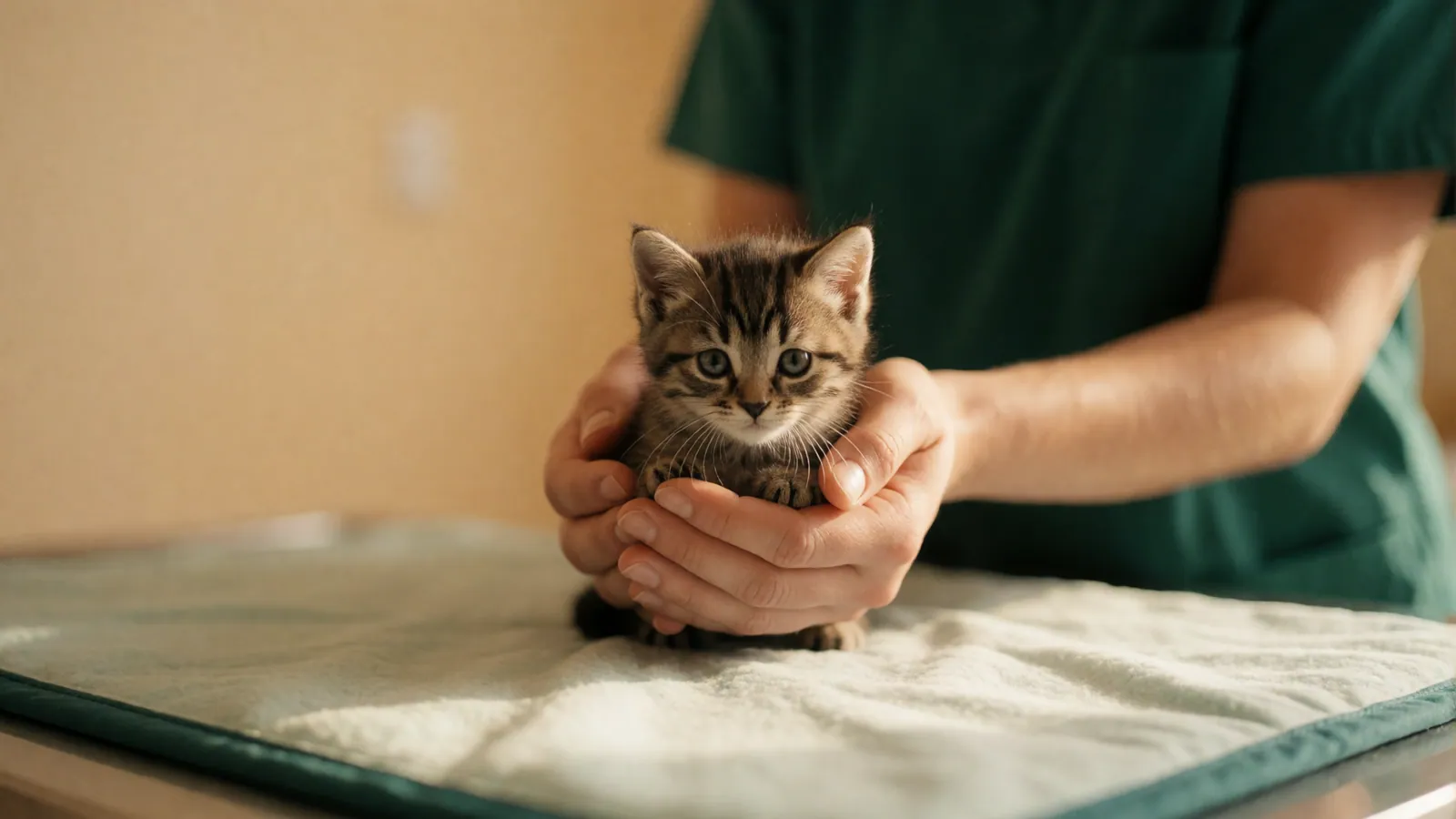
A puppy or kitten vet visit in Woodside, NY should be built for the questions new owners actually have, not just the injection on the day's list. The first visit is $60 and includes a full examination, a weight on record, a parasite check, the first vaccination if one is due, and thirty minutes set aside specifically for questions — feeding, house training, socialising, what is normal and what is not. Most of what we cover in that half hour is never written on the appointment card, and it is very often the most useful part of the visit.
The first year has a genuine order to it, and treating it as one long list rather than a sequence of separate errands is where most of the value sits. Vaccination happens on an interval-driven course rather than a single dose — see /pet-vaccinations.html — parasite prevention changes as your animal grows toward its adult weight, and a microchip is usually implanted at the second or third visit once the schedule allows. None of these need to be figured out by you in advance; we lay the whole sequence out at the first visit so you know what is coming and roughly when.
Neutering is discussed rather than scheduled automatically, because the right age genuinely varies by breed and size, and a large-breed puppy in particular benefits from waiting longer than a small one. We will tell you where your specific animal sits on that timeline rather than applying one rule to every dog or cat that comes through the door. See /parasite-prevention.html for why the plan for a growing animal changes every few months rather than staying fixed at the first visit's amount.
The first visit, in detail
One appointment, five things covered, and thirty minutes that belong to your questions.
A full examination, from nose to tail
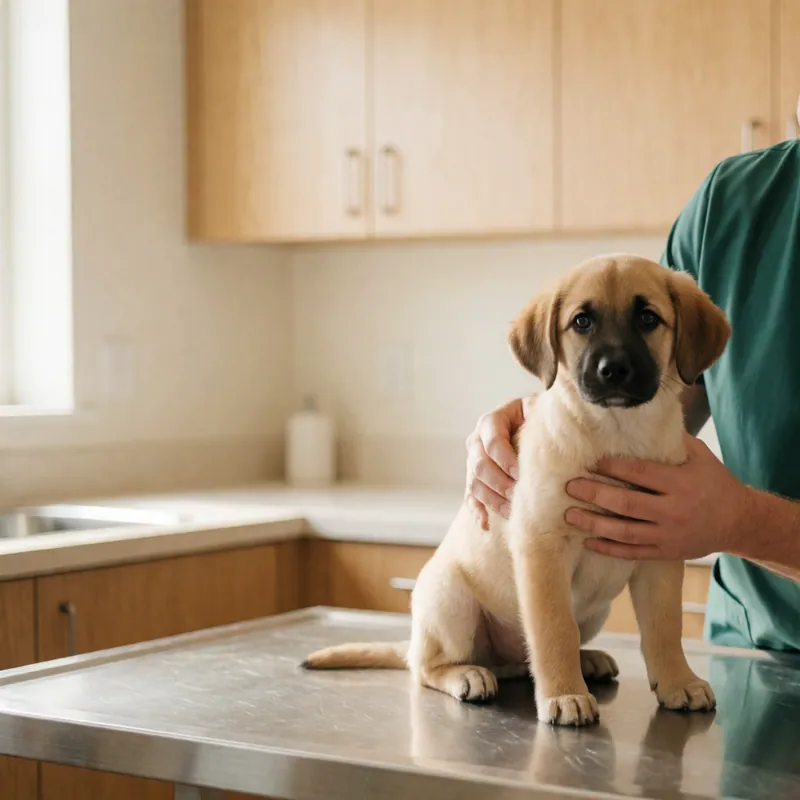
The same nose-to-tail examination every animal gets at any age — eyes, ears, mouth, heart, lungs, abdomen and joints — with particular attention at this young age to hernias, retained baby teeth, and joints that are still actively developing, none of which show up on a scale or a simple checklist alone without a hands-on look, which is why this visit is never rushed to fit a shorter slot.
A weight, and a growth conversation
Puppies and kittens are weighed at every visit and the number is set as the very first point on a growth chart that later visits then build on, since a single weight on its own means relatively little but a curve across several visits shows clearly whether growth is tracking normally for the size your animal is heading toward as an adult.
A parasite check and the first prevention dose
A look for fleas and other visible signs, plus prevention prescribed to the current actual weight rather than an adult estimate guessed in advance, because a young animal's correct amount genuinely changes every few weeks as it grows. See /parasite-prevention.html for why this is revisited at almost every single visit in the first year rather than set once and forgotten about until the next reminder.
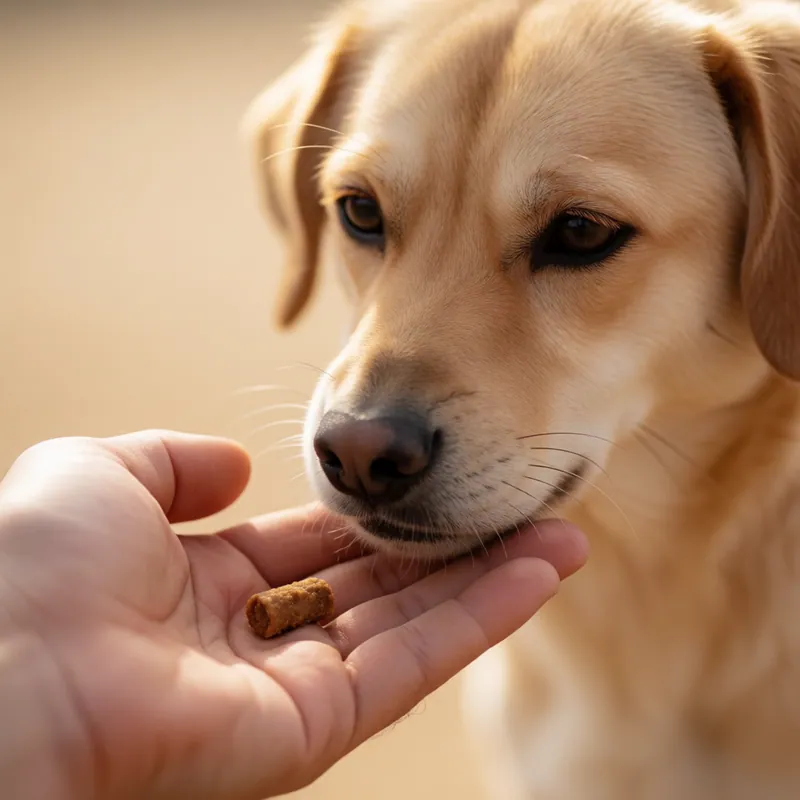
The first vaccination, if one is due
Given only after the brief health check that happens before any vaccination at all, and then recorded on a card that shows exactly what was given and precisely when the next one falls due, so the whole course stays properly on track even if life gets genuinely busy between one visit and the next. That card is worth keeping somewhere you will actually find it again.
Thirty minutes that are actually yours
Set aside specifically for the ordinary questions that come with any new animal — feeding amounts and schedule, house training, what normal play and normal biting actually look like at this age, and when something you have noticed is worth a call rather than simply a wait. Nothing about this half hour is billed separately or rushed to fit a shorter slot.
The first year, mapped out
Five stages, roughly in order, from the first vaccination to the neutering conversation.
Weeks 6 to 16 — the vaccination course
Visits roughly every three to four weeks across this stretch, because the course depends entirely on the gap between doses rather than simply the total number eventually given. This is also usually when the rabies vaccination New York State requires gets completed, timed to your animal's actual age rather than to whatever is convenient. See /pet-vaccinations.html for how the core and rabies vaccines fit together across these visits.
Weeks 8 to 16 — the socialisation window
The period when calm, positive exposure to new people, animals, sounds and situations has by far the most lasting effect on adult temperament later in life, and it closes earlier than most new owners genuinely expect it to. We talk through this at the very first visit specifically, because waiting until the vaccination course finishes closes most of that window before it is ever used.
Around 12 to 16 weeks — microchipping
Usually implanted at the second or third visit once your animal is a little larger and the timing genuinely suits the rest of the schedule, though it can certainly be done earlier or later if particular circumstances call for it instead. /microchipping.html covers why the registration sitting behind the chip matters every bit as much as the implant procedure itself.
4 to 12 months — parasite cover that keeps changing
Prevention prescribed to a growing animal's weight is revisited at nearly every single visit across this stretch rather than set once at the very first appointment and left unchanged, because the correct amount for a 3kg puppy is simply not the correct amount for that same animal at 20kg four months later on. We track the current weight ourselves rather than expect you to estimate it at home.
6 to 18 months, breed-dependent — neutering
Discussed properly rather than scheduled automatically by default, because the right timing genuinely depends on breed and expected adult size far more than on a fixed calendar age — a large-breed dog generally benefits from waiting considerably longer than a small one would. We will tell you honestly where your specific animal sits on that timeline at the appropriate visit rather than guessing early.
Questions new owners actually ask in that first thirty minutes
Not medical emergencies — the ordinary questions that come with a new animal in the house.
How much and how often to feed
The honest answer changes considerably as your animal grows, which is exactly why we discuss amount and frequency again at each visit rather than simply giving one fixed figure for the whole first year. Body condition, not a chart figure alone, is genuinely what tells us whether the current amount being fed is actually right for this particular animal at this particular stage of its growth.
What normal puppy or kitten behaviour looks like
Mouthing, boundless bursts of energy, sleeping in sudden long stretches, and a kitten treating your ankle as a perfectly legitimate hunting target are all entirely typical rather than a sign that something is wrong. We would much rather you ask us directly and be told plainly it is normal than have you worry about it alone at home for a month.
When a symptom is worth a call rather than a wait
Vomiting or diarrhoea that lasts more than a day, not eating at all for more than twenty-four hours, or a young animal that suddenly seems flat or unusually unresponsive are all genuine reasons to call the practice rather than simply watch and wait, particularly at this young age where a small animal's reserves are considerably smaller than an adult's would be.
Introducing a new animal to existing pets
A slower, more deliberately structured introduction than most people plan for in advance genuinely pays off over the following months in a way that is easy to underestimate beforehand. It is a common enough question that we would honestly rather talk it through properly at the visit itself than have you work it out alone from whatever you find in a search online.
What actually happens if you have already missed a visit
Life gets in the way sometimes, for all sorts of ordinary reasons, and a gap in the schedule is not by itself a reason to avoid simply coming back in. Call the practice, tell us plainly what has and has not been done so far, and we will work out the real current position together rather than treating a late start as some kind of lost cause.
Puppy & Kitten Care in western Queens
The first visit is $60 and includes thirty unhurried minutes to ask everything, and from there we map the whole first year — vaccination, parasite cover, microchipping and neutering — onto one sheet of paper.
It starts the same way whatever you are here for: a full examination with time to talk, what we found explained in plain English, and a written estimate for anything beyond the consultation before it happens. You are entitled to take that estimate away and think about it, and to ask what happens if you do nothing. That last one is a real question and it gets a real answer.
This is general information, not veterinary advice. This page describes a service. It is general information and it is not veterinary advice, a diagnosis or a treatment plan for any particular animal, because no page can examine your pet. If your animal is unwell, injured or behaving unusually, speak to a licensed veterinarian who can actually see it. In an emergency contact your own veterinarian or a 24-hour emergency animal hospital immediately.
Questions
Puppy & Kitten Care — the questions we are asked most
How much does a puppy or kitten's first vet visit cost?
$60, which includes a full nose-to-tail examination, a weight on record, a parasite check, the first vaccination if one is due, and thirty minutes set aside specifically for your questions. That half hour is not billed separately or shortened to fit a busier day — it is built into the price because it is genuinely the most useful part of a first visit for most new owners.
How often does my puppy or kitten need to be seen in the first few months?
Roughly every three to four weeks from about six weeks old until sixteen weeks, because the vaccination course depends on the interval between doses rather than the total number given. /pet-vaccinations.html sets out how the core and rabies vaccines fit into those visits. After sixteen weeks the interval opens up considerably, usually to once or twice a year.
When should my puppy or kitten be microchipped?
Usually at the second or third visit, once your animal is a little larger and the timing fits the rest of the schedule, though it can be done earlier or later if circumstances call for it. It costs $55 including registration on a national database in your name, and /microchipping.html explains why keeping that registration current matters as much as the implant itself.
When is the right age to neuter my dog or cat?
It genuinely depends on breed and expected adult size rather than a single fixed age — a large-breed dog generally benefits from waiting longer than a small one or a cat. We discuss timing at the appropriate visit rather than scheduling it automatically at a set age, and we will tell you honestly where your specific animal sits on that timeline.
What vaccinations does my puppy or kitten actually need?
Core vaccines for essentially every dog or cat — distemper, parvovirus and adenovirus for dogs, panleukopenia, calicivirus and herpesvirus for cats — plus the rabies vaccination New York State requires, given across the course rather than as one dose. Non-core vaccines are discussed separately based on actual lifestyle. The full detail is on /pet-vaccinations.html and the age-based interval on /vaccination-schedule.html.
What is the socialisation window everyone talks about, and have I already missed it?
It is the period, roughly eight to sixteen weeks, when calm, positive exposure to new people, animals, sounds and situations has the most lasting effect on adult temperament. It closes earlier than most new owners expect, which is why we raise it at the first visit rather than waiting for the vaccination course to finish. If your animal is already past it, call the practice — a great deal can still be done, just differently.
My puppy or kitten missed some early visits. What should I do now?
Call the practice and tell us honestly what has and has not been done — a late start is not a lost cause, but it does change the plan, particularly for the vaccination course, which may need adjusting rather than simply resuming from where a printed schedule says it should be. We would much rather work out the real current position with you than have you guess at it.
Is thirty minutes really set aside just for questions at the first visit?
Yes, and it is built into the $60 price rather than charged as extra time. Feeding, house training, what counts as normal behaviour, and when something is worth a call rather than a wait are all genuinely common questions, and most of what gets covered in that half hour never appears on the appointment card at all.
Related
Usually booked alongside this
Wellness & Prevention
Pet Care
Everything routine pet care covers in Woodside, NY, from a puppy's first visit through a senior's twice-yearly check-up, with the specific service, the actual interval and the price for each one.
Read more
Wellness & Prevention
Wellness Exams
A full nose-to-tail wellness exam for $75, or an extended senior health check with blood pressure and a senior blood panel for $145 — both including a written plan you actually leave with.
Read more
Wellness & Prevention
Vaccinations
Core vaccines for dogs and cats, the rabies vaccination New York State requires, and an honest answer about titre testing — each priced plainly and given at the interval that actually protects your animal.
Read moreA written estimate before anything is booked
Book an appointment
We hold same-day appointments back on every single day of the week for animals that were well yesterday. Call the practice and describe what you have noticed, and the desk will book you at the right speed rather than the soonest one.