Is something wrong right now? If your pet is struggling to breathe, has collapsed, is bleeding heavily, cannot pass urine, has a swollen hard abdomen, is having a seizure, has been hit by a car, or has swallowed something you think is poisonous, this is an emergency. Call us before you set off so we can be ready for you, and if we are closed call a 24-hour emergency hospital straight away. Do not wait to see whether it settles. Call 000-000-0000
Itching is the single most common reason a dog is brought to see us, and it is worth saying plainly at the start: itch is a symptom, not a diagnosis. A dog scratching its ears, chewing its paws or losing hair along its back could be dealing with fleas, a bacterial or yeast infection, a food sensitivity, an environmental allergy, or two or three of those at once layered on top of each other. Treating the itch without working out which of these is present, or in what combination, is why so many skin cases drag on for months without ever actually improving.
A sample taken from the skin or the ear and examined under the microscope during the same appointment, rather than guessed at from how a rash looks, is the single step that changes the most about how a skin case is managed here. Bacteria, yeast and inflammatory cells look distinct under the microscope, and the same red, greasy ear can be caused by any of them, each needing a different approach. Cytology costs $85 per site and it is the reason we can tell you, at the visit, roughly what is actually happening rather than starting with a guess and hoping for the best.
Where food is suspected, a proper elimination trial takes a defined number of weeks on a single specific diet with nothing else at all in the bowl, and it is worth doing correctly the one time rather than repeating a half-hearted version for a year. Environmental and many food-related skin conditions in dogs are lifelong tendencies rather than problems that resolve completely, and we would rather tell you that honestly at the first visit than let you expect a cure that a single treatment cannot deliver. See /wellness-plans.html for how a Wellness Plan folds recurring skin visits into one predictable cost.
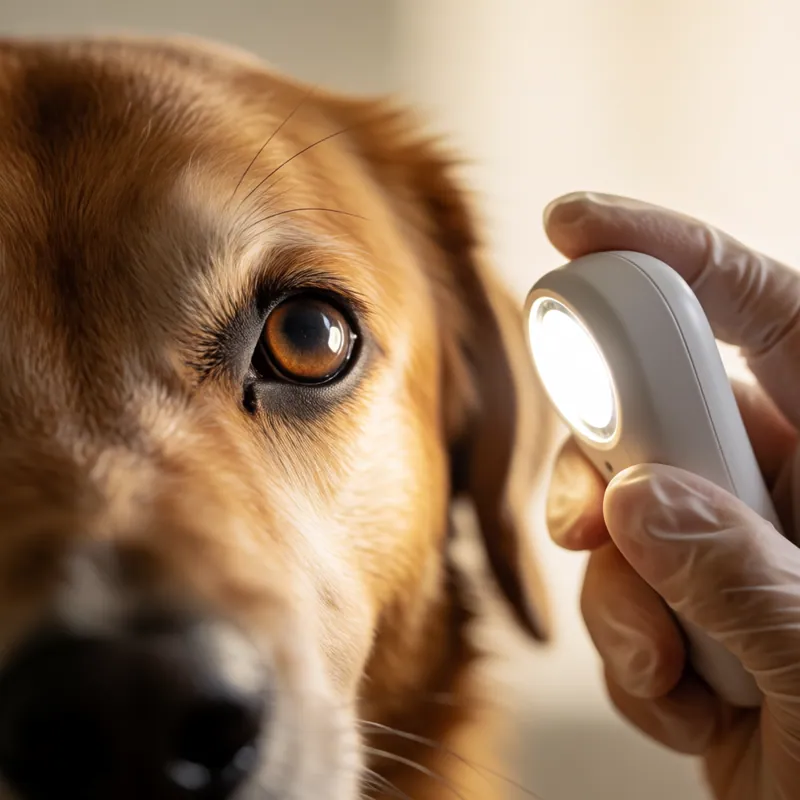
Itch is where the visit starts, not where it ends
The same red, itchy patch can be caused by several different things, and the treatment for one can make another worse.
Parasites, checked first because they are checked fastest
Fleas, mites and lice are ruled in or out early because they are quick to check for and, if present, will undermine any other treatment until they are dealt with. A single flea bite can trigger days of intense itching in a sensitive dog, well out of proportion to how few fleas are actually found on examination that day. This is also the check most owners assume has already been ruled out at home, and it is worth confirming rather than assuming, because a lightly affected coat can look clean to the naked eye.
Bacterial and yeast infection
Skin that has been itchy for any length of time very often develops a secondary bacterial or yeast infection on top of whatever started it, and that infection needs its own identification and its own course of treatment before the underlying cause can be seen clearly. This is one of the most common reasons a skin case looks like it is not responding to treatment.
Food sensitivity
A genuine adverse reaction to a specific protein or ingredient, which shows up as itching, ear problems or gut upset and can develop at any age, including in a dog that has eaten the same food for years without issue. It is confirmed by an elimination trial, not by switching foods repeatedly and watching to see what happens next. It is more common than many owners expect, and it is frequently mistaken for an environmental allergy until a proper trial actually separates the two.
Environmental allergy
A reaction to pollen, dust mites, mould or other airborne allergens, often seasonal to begin with and becoming year-round as it progresses over time. This is the category most likely to be a long-term tendency rather than something a single treatment resolves, and it is usually where an ongoing management plan does the most good for your dog. Breed plays a real role too, and certain breeds are represented in this category far more often than their share of the general dog population would suggest.
More than one cause layered together
It is entirely normal for an itchy dog to have fleas, a secondary infection and an underlying environmental allergy all present at once, each contributing to the picture. Treating only the most obvious layer and stopping there is why some skin cases seem to improve briefly and then relapse a few weeks later. Untangling the layers usually happens over more than one visit, treating and rechecking each in turn rather than guessing at all of them simultaneously on day one.
Why cytology at the visit changes the plan
A sample taken during your appointment tells us what is present now, not what was probably there last time this happened.
What a cytology sample actually shows
A swab or a piece of clear tape pressed to the skin, or a swab from inside the ear, picks up cells that are stained and examined under the microscope within the same appointment. Bacteria, yeast and inflammatory cells each have a distinct appearance, and seeing which is present, and roughly how many, changes what is actually recommended that day.
Why guessing from appearance alone goes wrong
A red, greasy ear can look almost identical whether the cause is bacteria, yeast, or both together, and the wrong assumption leads to weeks of a treatment that was never going to work on that particular organism. Eighty-five dollars for a same-visit sample is considerably cheaper than a month spent on the wrong approach. It also delays finding the actual underlying trigger, since weeks spent on a treatment that was never going to work are weeks the real cause had to progress unchecked.
Rechecking cytology, not just symptoms
Where an infection is being treated, we often recheck the same site under the microscope rather than relying only on how it looks or how itchy your dog seems, because a skin or ear that looks better can still show organisms present on the slide, and stopping too early is a common reason infections come straight back. A recheck also confirms that the specific organism we found originally is actually responding, rather than a different one quietly taking its place while the first one clears.
What cytology cannot tell us
It identifies what is present on the skin or in the ear right now, not the underlying cause behind it — an infection can be confirmed and treated while the food sensitivity or environmental allergy that allowed it to take hold in the first place still needs its own separate investigation and plan. This is why clearing an infection is sometimes only the first step of a visit rather than the whole answer, and why we will often ask you back specifically to look for what let the infection start.
Chronic ears, examined properly
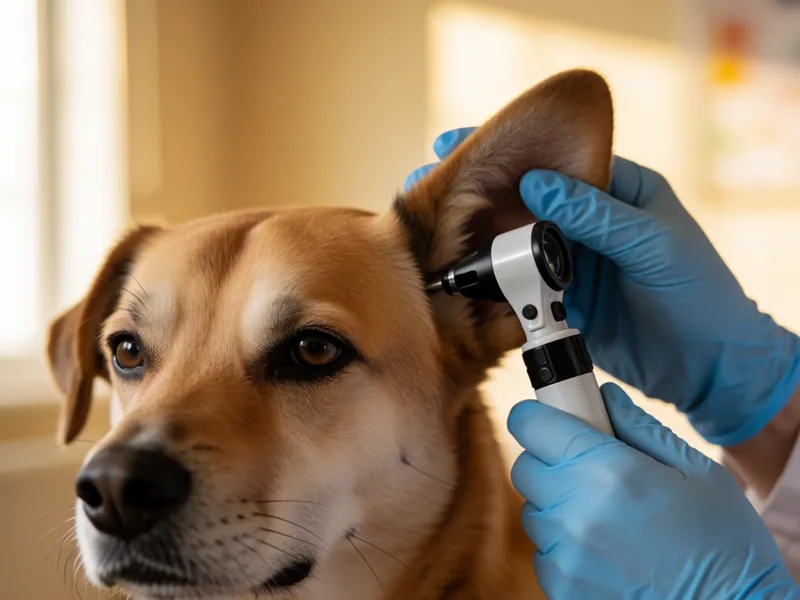
A dog with ears that flare up repeatedly benefits from an otoscopic examination alongside cytology, checking the ear canal itself for narrowing, growths or a ruptured eardrum that a swab alone would not reveal, and which changes what can safely be recommended for that ear going forward. A canal that has narrowed from repeated past inflammation behaves very differently to a healthy one, and treating both the same way is one of the more common reasons a chronic ear case keeps returning despite what looks like the right treatment each time.
Food trials, and managing rather than curing
Both take patience, and both work far better done correctly once than repeated half-heartedly for a year.
Why a food trial has to be strict to mean anything
A genuine elimination trial means one specific diet and nothing else at all — no treats, no flavoured medication, no scraps, no second pet's bowl left within reach — typically for a defined number of weeks, because a single unplanned treat can invalidate weeks of otherwise careful work. We will talk you through exactly what that means for your household before you start.
What counts as success, and what does not
A genuine improvement during the trial, followed by a flare when the original diet is reintroduced under supervision, is what actually confirms a food sensitivity — improvement alone without that confirming step leaves room for coincidence, since many skin cases also improve simply with time and any concurrent treatment already under way. We will plan that reintroduction step with you in advance, at a time that suits your household, rather than leave it as a vague idea for some point after the trial has technically ended.
This is very often managed, not cured
Environmental allergy in particular is usually a lifelong tendency rather than a problem that resolves permanently, and a food sensitivity, once confirmed, generally means an ongoing diet choice rather than a phase to get through. We would rather set that expectation honestly at the first visit than have you feel the plan has failed when itching returns after treatment stops.
What a long-term management plan actually contains
Typically a specific diet or feeding approach, a bathing routine using a product chosen for that individual dog's skin, and a plan for flare-ups that lets you recognise one early and bring your dog in before it becomes a full secondary infection again. We select the specific approach for your dog at the visit rather than offering a generic routine.
Why we do not sell a shampoo or a dose over the phone
What suits one dog's skin can worsen another's, and the right product, strength and frequency depend on what we actually found on that dog at that visit — so we will not recommend a specific product or a home dosing routine without seeing your dog first. If your dog is already on something that seems to be working, tell us and we will factor it into the plan.
Skin, Ear & Allergy in western Queens
Itch is a symptom rather than a diagnosis, and the same red, irritated ear or paw can have several different causes that a cytology sample taken at the visit narrows down before anything is prescribed.
It starts the same way whatever you are here for: a full examination with time to talk, what we found explained in plain English, and a written estimate for anything beyond the consultation before it happens. You are entitled to take that estimate away and think about it, and to ask what happens if you do nothing. That last one is a real question and it gets a real answer.
This is general information, not veterinary advice. This page describes a service. It is general information and it is not veterinary advice, a diagnosis or a treatment plan for any particular animal, because no page can examine your pet. If your animal is unwell, injured or behaving unusually, speak to a licensed veterinarian who can actually see it. In an emergency contact your own veterinarian or a 24-hour emergency animal hospital immediately.
Questions
Skin, Ear & Allergy — the questions we are asked most
My dog is constantly itchy. What is actually wrong?
Itching is a symptom with several possible causes — parasites, a bacterial or yeast infection, a food sensitivity, an environmental allergy, or more than one of these layered together — and it is rarely useful to treat the itch itself without working out which is present. We start with an examination and usually a cytology sample taken during the same visit, which tells us what is actually happening on the skin right now rather than leaving us to guess.
What does the cytology test actually involve, and why do it every visit?
A swab or a piece of tape lifts cells from the skin or the ear, which are stained and examined under the microscope while you are still in the appointment, at $85 per site. Bacteria, yeast and inflammatory cells look distinct, and knowing which is present changes what is actually recommended that day. We often recheck it at a follow-up too, since a skin or ear that looks better can still show organisms under the microscope.
How does a food trial for allergies actually work?
A genuine elimination trial uses one specific diet and absolutely nothing else — no treats, no flavoured medication, no scraps — for a defined number of weeks, because a single unplanned extra can undo weeks of otherwise careful work. Improvement during the trial followed by a flare when the original food is reintroduced under supervision is what actually confirms a food sensitivity. We will talk through what this means for your household before you start.
Will this ever go away completely, or will my dog always have skin problems?
Honestly, it depends on the cause. A parasite or a straightforward infection can resolve completely once treated. Environmental allergy is usually a lifelong tendency that is managed well rather than cured outright, and a confirmed food sensitivity generally means an ongoing diet choice rather than a temporary phase. We would rather tell you this plainly at the first visit than let you expect a single course of treatment to end something that tends to recur.
Can you just tell me what shampoo or medication to use over the phone?
No, and the reason is straightforward — the right product, strength and routine depend entirely on what is actually present on your dog's skin at the time, which we only know once we have examined your dog and, usually, looked at a sample under the microscope. What helps one dog's skin can worsen another's. We will select and explain the specific approach for your dog at the visit rather than recommend anything without seeing the animal.
How much does a skin or allergy visit cost?
The consultation itself is $95 and includes a full history and examination. A cytology sample from the skin or ear, examined under the microscope during the same visit, is $85 per site. A follow-up recheck on a case we are already treating is $48 within six weeks. If bloodwork is needed to rule out an underlying condition, an in-house panel is $130. We will tell you which of these your dog's case actually needs before running anything.
My dog's ears keep coming back with infections. Why does treatment not just fix it?
Recurring ear infections are frequently a symptom of an underlying allergy or anatomy issue rather than a problem with the treatment itself, so clearing an infection without addressing what allowed it to take hold means it is likely to return. We look at the ear canal itself as well as the cytology sample, and a dog with genuinely recurrent ears usually needs an ongoing management plan rather than one course repeated each time it flares.
Is it worth seeing you if my dog only gets itchy in certain seasons?
Yes, and seasonal itching is a useful clue rather than something to wait out each year. It points toward an environmental allergy, and a pattern that is only mild and seasonal now can become more frequent or year-round over time if it is left unmanaged. Bringing your dog in during or shortly before the season it usually flares lets us confirm the cause with cytology and put a plan in place before it turns severe.
Related
Usually booked alongside this
Diagnostics & Medicine
Sick Visits
Same-day appointments held back on every day of the week for an animal that was well yesterday and is not well today, with a desk trained to tell how quickly you need to be seen.
Read more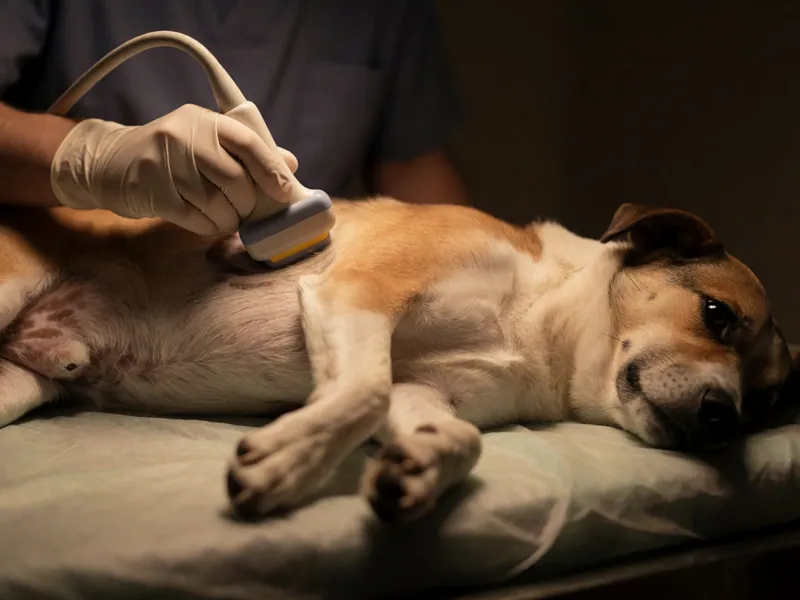
Diagnostics & Medicine
X-Ray & Ultrasound
Digital radiography for a bone, an object or an organ's size and position, and ultrasound for what that organ's own tissue looks like on the inside, with images kept on your animal's record.
Read more
Diagnostics & Medicine
In-House Laboratory
Haematology, biochemistry, urinalysis and cytology run in the building, with most results back inside the hour — the difference between starting treatment today and starting it after a weekend wait.
Read moreA written estimate before anything is booked
Book an appointment
We hold same-day appointments back on every single day of the week for animals that were well yesterday. Call the practice and describe what you have noticed, and the desk will book you at the right speed rather than the soonest one.