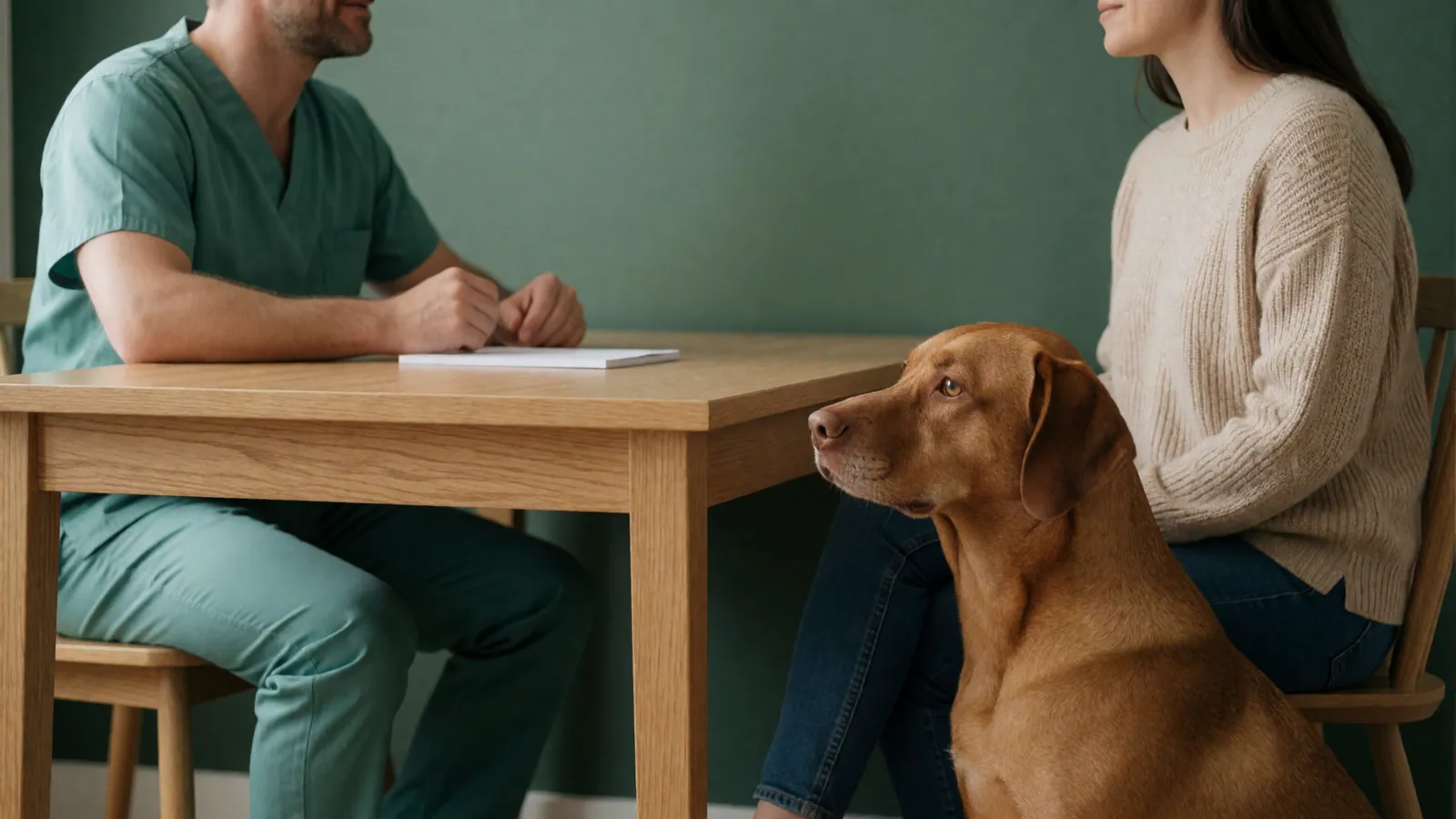
From the phone call onward
Five steps, from booking to the follow-up call
This is what you experience, from your side of it.
Tell us what is happening
Call, or use the form, and describe what you have noticed rather than what you think it is. Not eating, drinking more, limping on and off, quieter than normal — those are the observations that matter. The desk will ask a short set of questions to work out how quickly you need to be seen.
We book you at the right speed
Not everything is urgent and not everything can wait. Something that started this morning gets a same-day slot; a lump that has been there six months gets a proper unhurried appointment later in the week. We would rather give you the right appointment than the soonest one.
The consultation
Twenty minutes for a first appointment, thirty for a puppy, kitten or senior visit, and longer for cats, because rushing a cat wastes the appointment. You will not be moved along because the diary is full.
A plan you agreed to
You leave with a written plan and a written price. If there is a choice between two reasonable approaches, we will tell you there is a choice rather than picking for you — including when one of them is to wait and see.
We stay in touch
Test results are phoned through by the veterinarian who saw your animal, not texted as a number you have to interpret. If something needs changing, we change it before the next appointment rather than at it.
In the room
What actually happens once you are with us
The same visit, described from the appointment itself rather than from the phone call that booked it.
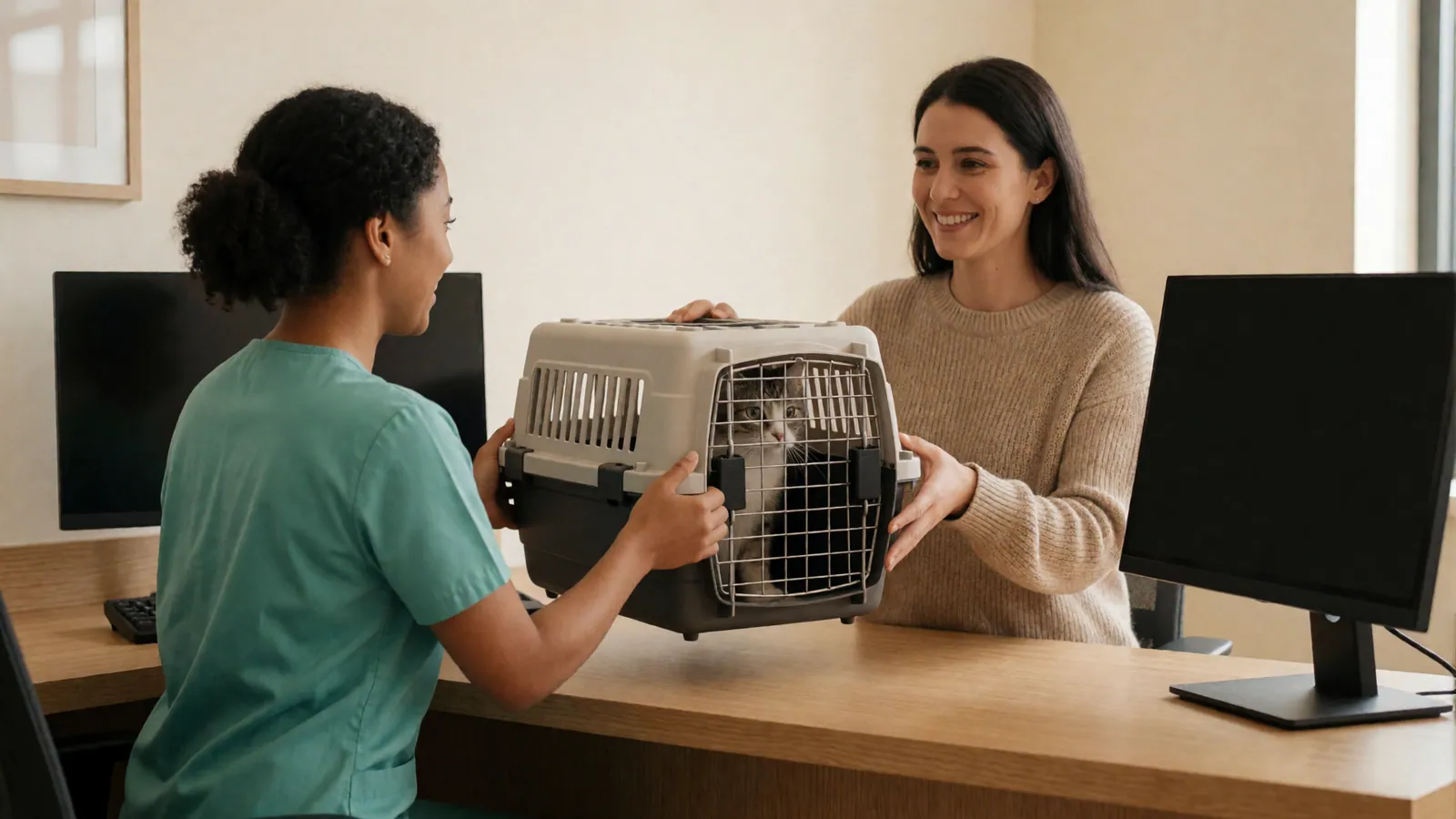
Arrive and check in
Come in through the main door on 61st Street, or the cat wing door to the left of it if you are bringing a cat. Tell the desk who you are and they will let the clinical team know you have arrived. If your animal is anxious in a waiting room, say so — we will put you straight into a room, or keep you in the car and text you.
The examination
A full nose-to-tail examination with time to talk. We weigh every animal every visit, because weight is the single most useful number in the file, and we will ask about eating, drinking, toileting and behaviour before we ask about the reason you came.
What we found, in plain English
You get told what we found and what we think it means, including when the honest answer is that we do not yet know. If we need tests to find out, we will tell you what each one would change about the plan before you agree to any of them.
The estimate
Anything beyond the consultation gets a written estimate before it happens. You are entitled to take it away, think about it, or ask what happens if you do nothing — that last one is a real question and it gets a real answer.
Going home
You leave with written instructions, not just spoken ones, and with a named person to call if something changes. Any medication is explained and demonstrated before you go, and we will happily give the first dose here.
The follow-up
Anything we treated gets a follow-up, and for most things that follow-up is free. If your animal is not better on the day we said it would be, we want to know that rather than have you wait for the next appointment.
Why it is described twice
Two lists, because they answer different questions
The first tells you when to expect a call. The second tells you why the number in that call is the number on the invoice, not a starting offer that grows once you have agreed to it.
The hinge between the two is the examination itself. Nothing is priced from a phone description alone — your animal is actually seen and weighed before anything beyond the consultation is estimated, which is the only way to write a number that survives contact with the actual patient rather than with what you thought was wrong on the way in.
What we commit to
Five things that hold regardless of what the visit was for
Not a warranty in the sense a repair shop means it — these are commitments about the estimate, the follow-up, and the moments when we get something wrong.
The estimate comes first
Every procedure is quoted in writing before it is scheduled, itemised so you can see what each part costs. If you want the cheapest clinically acceptable version of a plan, ask — there often is one, and we will tell you what you give up by choosing it.
We stop if the number changes
If something is more complicated than it looked, we stop and call you. The only exception is where stopping would put the animal at risk, and in that case we do what is necessary and explain it afterwards without charging you for the surprise.
Follow-ups on our work are free
Any recheck relating to something we treated is free for six weeks. That includes post-operative checks, suture removal and a revisit for a problem that has not resolved the way we said it would.
If we got it wrong, we say so
Medicine is uncertain and sometimes a first diagnosis turns out to be the wrong one. When that happens we tell you, we do not charge you a second consultation fee to be told, and we start again from the evidence rather than defending the original answer.
Your records are yours
Ask and we will send your complete records anywhere you like, free, the same working day, without a conversation about why you are leaving. A practice that makes that difficult is protecting itself rather than your animal.
Questions
How a visit works — what people ask most
How long does an appointment actually take?
Twenty minutes for a routine consultation, thirty for a puppy, kitten or senior visit, and longer for a cat, because rushing a cat wastes the appointment rather than saving time. You will not be moved along because the diary is full elsewhere.
Can I wait in the car instead of the waiting room?
Yes. Tell the desk when you arrive, leave a number, and we will call or text when a room is ready rather than paging you over a speaker. Several clients with anxious dogs or cats do this as a matter of routine.
What happens if you find something else once you have started?
We stop and call you before going any further, describe what we found and why it changes things, and give you a revised written estimate before anything more happens. The only exception is where pausing would put your animal at immediate risk, in which case we do what is necessary to stabilise them and explain it fully afterwards.
Do cats get rushed through the same as dogs?
No, deliberately. Feline appointments are booked longer than canine ones because a cat that has been given time to settle can usually be examined fully without sedation, and a rushed examination that cannot be completed is worth nothing to the cat or to us.
What actually happens after the appointment ends?
You leave with a written plan and a named person to call if something changes. Anything we treated gets a follow-up, and for most problems that follow-up costs nothing — we would rather see your animal again for free than have you wait and hope it resolves on its own.
A written estimate before anything is booked
Book an appointment
We hold same-day appointments back on every single day of the week for animals that were well yesterday. Call the practice and describe what you have noticed, and the desk will book you at the right speed rather than the soonest one.