Is something wrong right now? If your pet is struggling to breathe, has collapsed, is bleeding heavily, cannot pass urine, has a swollen hard abdomen, is having a seizure, has been hit by a car, or has swallowed something you think is poisonous, this is an emergency. Call us before you set off so we can be ready for you, and if we are closed call a 24-hour emergency hospital straight away. Do not wait to see whether it settles. Call 000-000-0000
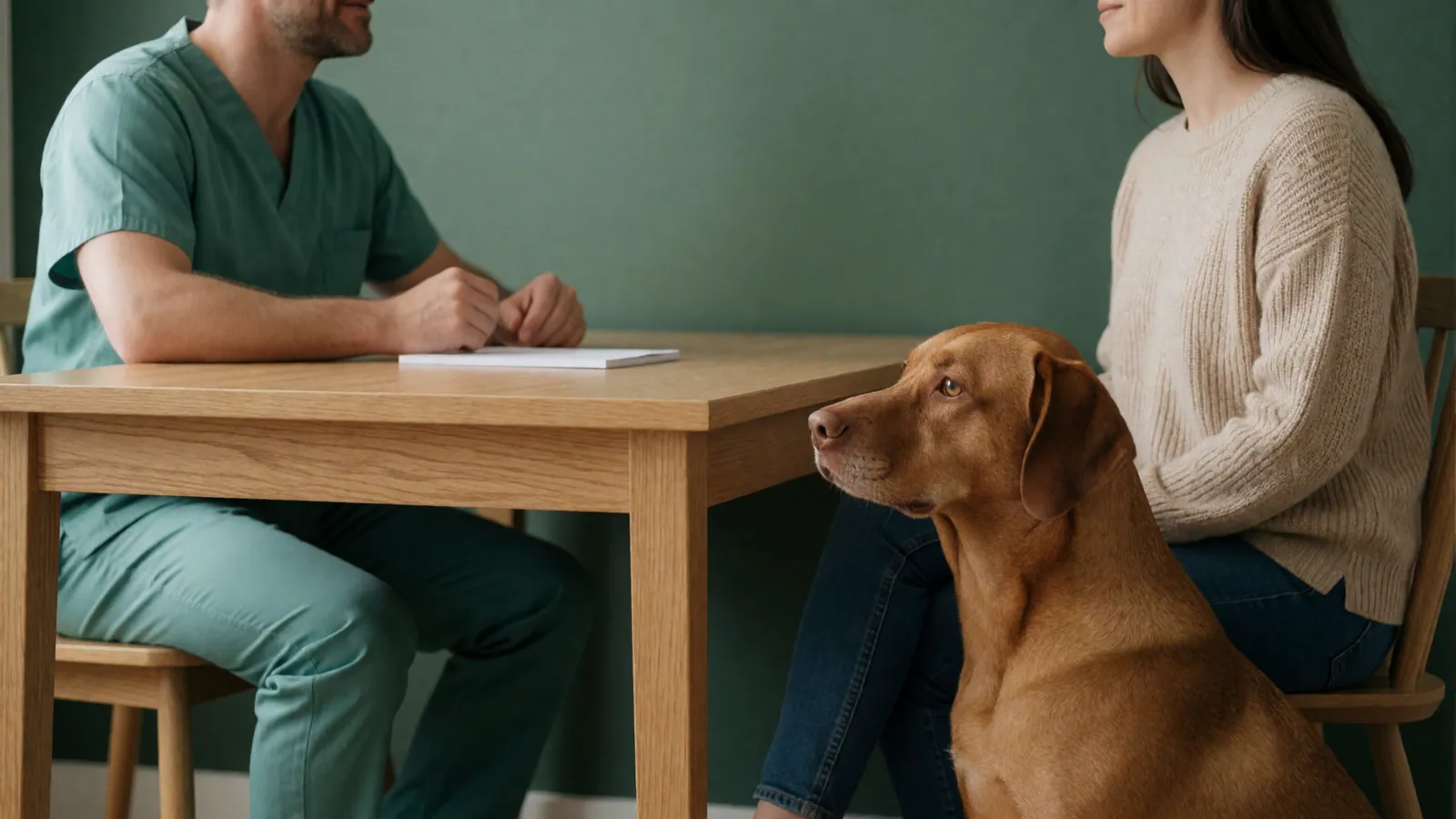
A sick visit exists for one situation: your animal was fine yesterday and is not fine today. It is a different appointment from a wellness examination, and it is scheduled differently — a block of same-day slots is held back on every single day specifically for this, rather than being folded into whichever afternoon next week happens to have room. Call as early in the day as you can, though the block runs until closing and afternoon calls are seen too. The consultation itself is $95 and buys a full examination, a plain account of what we found, and a written plan for what happens next.
What you tell the desk on the phone decides how quickly you are seen, so specific observations do more work than a general sense that something is wrong. Not eating since this morning, drinking noticeably more, limping on one leg but bearing weight, vomited twice and then settled — each of those lets a receptionist or a technician judge urgency against a known list of warning signs, rather than guess from tone of voice. A phone video of the behaviour itself, a wobble, a cough, a way of standing, is frequently more useful on arrival than any description we could get over the phone.
Not every sick visit ends in treatment, and an honest one says so. If the right answer after examining your animal is to wait and watch rather than intervene, that appears on the estimate as its own line, with a plain description of what would change our mind and when to come back. A follow-up on anything we are already treating is $48 within six weeks, and if you want a second set of eyes on a diagnosis from elsewhere, a second opinion consultation is $110 and includes a full review of the existing records. See /emergency-checklist.html if you are unsure whether this can wait for an appointment at all.
What is actually useful to tell us
A few specific observations do more for triage than a general sense that something is wrong.
Appetite and thirst, stated as a change
Say what has changed against your animal's own normal rather than a general impression — has not eaten since breakfast, has emptied the water bowl twice today, refused a treat it would usually take immediately. A vague 'not himself' tells us less than one specific meal missed, because animals vary hugely and we are looking for a change from their baseline, not a comparison with some average pet.
How the animal is moving
Limping on one leg while bearing some weight is different from refusing to put a leg down at all, and both are different from a stiffness that eases after a few minutes. Tell us which leg if you can see it, whether it came on suddenly or gradually, and whether it is worse after rest or after exercise — that distinction alone often separates a same-day slot from a routine booking further down the week.
What came out of them, and when
The colour, frequency and consistency of vomiting or diarrhoea, and roughly how many hours ago it started, are more useful than the word 'sick' on its own. If your dog vomited once after eating too fast and is now bright and asking for dinner, that is a different phone call from vomiting six times overnight with a swollen, painful abdomen — say what you actually saw, in the order it happened.
Behaviour that is 'not like them'
Hiding, unusual quietness, a cat that has stopped grooming, a dog that will not settle and paces — these are frequently the earliest and only sign that something is wrong, well before any physical symptom appears. Owners consistently underrate how much this information is worth on the phone, because it feels too vague to mention. Mention it anyway and let the desk decide whether it matters.
A short phone video beats a description
A ten-second video of the limp, the cough, the odd way of standing or the head tilt is frequently more useful on arrival than anything we could piece together from a description over the phone, because gait and repeated small movements are hard to put into words accurately. Send it ahead if you can, or simply show the desk when you arrive at the practice.
How the desk decides how fast you need to be seen
Triage is a real conversation on the phone, not a guess at how worried you sound.
The questions behind the questions
Whoever answers the phone is working through a known set of warning signs — breathing, gum colour, ability to stand, whether the abdomen looks swollen, how long symptoms have been present — even when the conversation feels informal. The questions are not idle chat while a slot is found; they are how we decide whether your animal needs to be seen this hour, this afternoon, or tomorrow morning.
Same-day does not mean seen instantly
A same-day slot means you are examined today, not that you are the very next appointment through the door — the desk will give you an honest window rather than a false promise of the next opening. If your animal's condition sounds like it is changing quickly while you wait, say so again when you arrive; the front desk can move you up the list on that basis alone.
When you are told to come straight in rather than book
Certain answers on the phone skip the booking conversation entirely — difficulty breathing, a swollen hard abdomen, collapse, heavy bleeding, straining to urinate without producing any. In those cases the desk will tell you to come in immediately rather than offer you a choice of times, and will ask you to call again from the car if anything changes on the way over.
What counts as an emergency, not a sick visit
A sick visit assumes your animal can wait the short time it takes to get an appointment; a genuine emergency cannot, and the two are treated differently from the first sentence of the phone call. Our /emergency-checklist.html page sets out the specific signs that mean call immediately and, if we are closed, go straight to a 24-hour emergency hospital rather than waiting for us to open.
Why we would rather you call than wait and see at home
Calling costs you a few minutes and nothing else, and a phone conversation with someone who knows what to ask is a better filter than guessing alone at home. We would much rather tell you honestly that something can wait until tomorrow than have you delay a call for something that could not. Nobody is ever made to feel foolish for ringing about something that turns out to be minor.
What happens at the appointment, including watchful waiting
An examination comes before any guess at what is wrong, and doing nothing is sometimes the right plan.
The examination comes before the guessing
A full nose-to-tail examination happens before any test is proposed, because hands and eyes still catch a great deal that a machine does not — a painful spot on palpation, an asymmetry, a smell, a subtle change in gum colour. What we find during that examination decides which tests, if any, actually make sense next, rather than running a standard panel regardless of what turned up.
Tests are proposed, not assumed
If bloodwork, a radiograph or a sample under the microscope would change what we do next, we will say so and explain what each one is actually looking for. If a test would not change the plan, we will tell you that too rather than run it anyway. Every proposed test comes with a price attached before you agree to it, never added afterward.
Watchful waiting, written down
Where the honest clinical answer is to wait rather than intervene, that is exactly what goes on the estimate — not as an absence of a plan, but as a plan with its own line, its own timeframe, and a plain description of the specific signs that would bring you back sooner. Doing nothing on purpose, with a reason and a deadline, is different from doing nothing by default.
The follow-up is part of the plan, not an extra sale
A revisit for a problem we are already treating is $48 within six weeks of the first appointment, and it exists because most treatment plans need one adjustment along the way. If your animal is not improving on the timeline we described, we want to see that revisit happen rather than have you assume the plan simply is not working and go elsewhere.
A second opinion, if you want one
A second opinion consultation is $110 and includes a genuine review of the existing diagnosis and records from wherever you were seen before, not just a repeat of the same examination. We will tell you plainly if we agree with the original assessment, which happens often, and equally plainly if we do not. See /pet-insurance-and-payment.html for how this weighs against a policy.
Sick Visits in western Queens
Same-day appointments held back on every day of the week for an animal that was well yesterday and is not well today, with a desk trained to tell how quickly you need to be seen.
It starts the same way whatever you are here for: a full examination with time to talk, what we found explained in plain English, and a written estimate for anything beyond the consultation before it happens. You are entitled to take that estimate away and think about it, and to ask what happens if you do nothing. That last one is a real question and it gets a real answer.
This is general information, not veterinary advice. This page describes a service. It is general information and it is not veterinary advice, a diagnosis or a treatment plan for any particular animal, because no page can examine your pet. If your animal is unwell, injured or behaving unusually, speak to a licensed veterinarian who can actually see it. In an emergency contact your own veterinarian or a 24-hour emergency animal hospital immediately.
Questions
Sick Visits — the questions we are asked most
How do I know if my pet needs a sick visit or can wait for a routine appointment?
If something has changed today that was not there yesterday — off food, limping, vomiting, unusually quiet, coughing — call and describe exactly what you have noticed. The desk will ask a short set of questions and tell you honestly whether it sounds like it can wait a few days or needs a same-day slot. If you are ever in doubt, call rather than wait; the conversation costs a few minutes and nothing else, and nobody is made to feel foolish for asking.
Can I actually be seen today?
Usually, yes. A block of appointments is held back on every single day specifically for animals that were well yesterday and are not well today, separate from the routine wellness diary. Call as early as you can, though the block runs through to closing and afternoon calls are seen as well. If what you describe sounds urgent rather than merely unwell, the desk will tell you to come straight in rather than book you a slot.
What should I actually tell the desk on the phone?
Specific, recent observations rather than a general impression — has not eaten since this morning, vomited twice and then settled, is limping on the back left leg, is hiding instead of greeting you at the door. Say how long it has been happening and whether it is getting better, worse, or staying the same. A short phone video of a limp, a cough or an odd way of standing is often more useful than any description over the phone.
How much does a sick visit cost?
The consultation itself is $95 and includes a full examination and a written plan for what happens next, whatever that plan turns out to be. A follow-up on anything we are already treating is $48 within six weeks of the first visit. Anything beyond the consultation — bloodwork, imaging, medication — is quoted to you in writing before it happens, so the $95 figure never quietly grows into a larger bill without your agreement.
Will you definitely run tests, or might you just wait and see?
Tests are proposed only when the result would actually change what we do next, and we will explain what each one is looking for before you agree to it. Sometimes the honest answer after examining your animal is to wait rather than intervene, and if that is our recommendation it goes on the estimate as its own line, with a clear description of what would change our mind. Doing nothing on purpose is a real clinical option here.
What counts as an emergency rather than a sick visit?
Difficulty breathing, collapse, heavy bleeding, a swollen hard abdomen, straining to urinate without result, a seizure, or being hit by a car are emergencies, and the phone call is handled differently from the first sentence — you will be told to come in immediately, not offered a choice of appointment times. Our /emergency-checklist.html page sets out the full list. If we are closed, go straight to a 24-hour emergency hospital rather than waiting for us to open.
My pet seems fine again since I called — should I still come in?
Often yes, and it is worth keeping the appointment rather than cancelling on the strength of a temporary improvement, particularly for vomiting, limping or lethargy that comes and goes. Symptoms that resolve on their own sometimes return, and a problem caught while your animal is still under observation is easier to investigate than one reconstructed from memory a week later. Tell the desk what has changed since you called and let a veterinarian make the call.
Can I get a second opinion on a diagnosis from another practice?
Yes, for $110, which includes a full review of the existing diagnosis and records from wherever your animal was seen. We will tell you plainly whether we agree with the original assessment, which happens more often than not, and equally plainly if we think something was missed. Bring or forward whatever records you have; if you cannot get hold of them, tell us and we will request them on your behalf.
Related
Usually booked alongside this
Diagnostics & Medicine
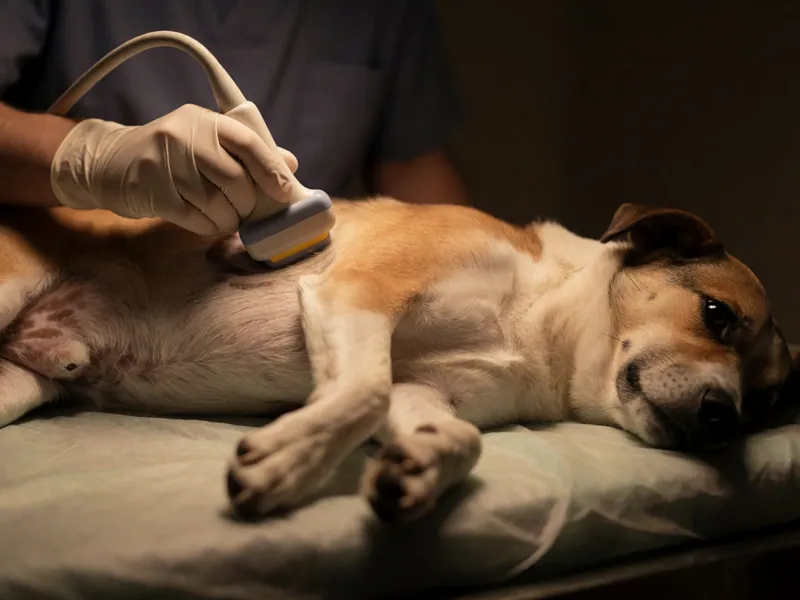
X-Ray & Ultrasound
Digital radiography for a bone, an object or an organ's size and position, and ultrasound for what that organ's own tissue looks like on the inside, with images kept on your animal's record.
Read more
Diagnostics & Medicine
In-House Laboratory
Haematology, biochemistry, urinalysis and cytology run in the building, with most results back inside the hour — the difference between starting treatment today and starting it after a weekend wait.
Read more
Diagnostics & Medicine
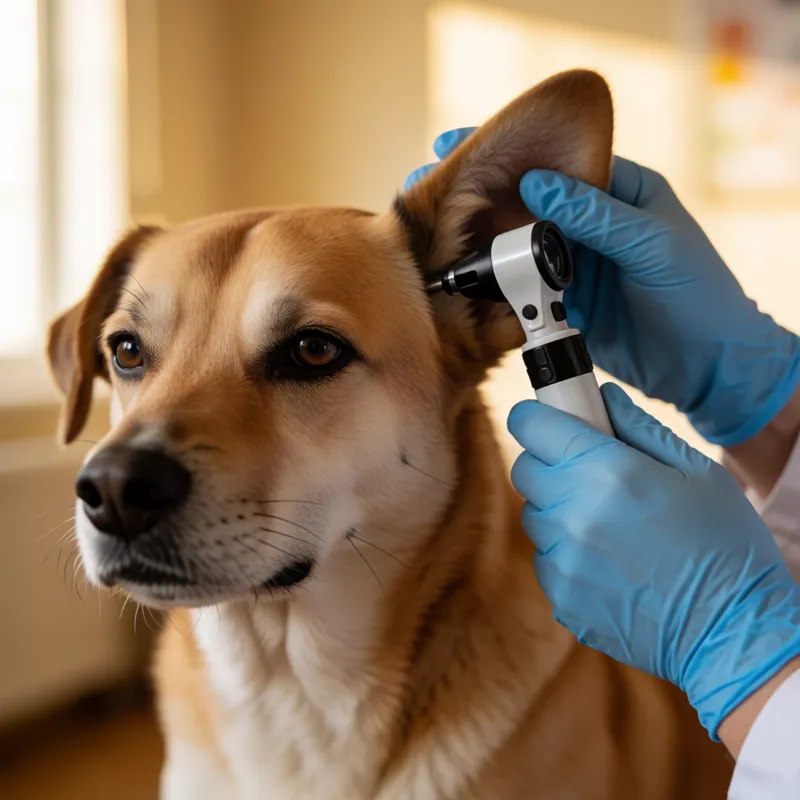
Skin, Ear & Allergy
Itch is a symptom rather than a diagnosis, and the same red, irritated ear or paw can have several different causes that a cytology sample taken at the visit narrows down before anything is prescribed.
Read moreA written estimate before anything is booked
Book an appointment
We hold same-day appointments back on every single day of the week for animals that were well yesterday. Call the practice and describe what you have noticed, and the desk will book you at the right speed rather than the soonest one.