Is something wrong right now? If your pet is struggling to breathe, has collapsed, is bleeding heavily, cannot pass urine, has a swollen hard abdomen, is having a seizure, has been hit by a car, or has swallowed something you think is poisonous, this is an emergency. Call us before you set off so we can be ready for you, and if we are closed call a 24-hour emergency hospital straight away. Do not wait to see whether it settles. Call 000-000-0000
Spay and neuter surgery in Woodside, NY is priced honestly by species and, for dogs, by weight — a cat neuter is $225, a cat spay is $395, a dog neuter runs $395 to $650 and a dog spay runs $495 to $850, because a young cocker spaniel and an adult mastiff are genuinely different amounts of surgical time and anaesthetic. Every one of those prices includes the anaesthetic itself, continuous monitoring, pain relief to take home, and the post-operative check — nothing is added afterwards that was not already in the number you agreed to.
We do not schedule neutering off a birthday. Timing depends on breed and size far more than age — a small-breed dog is often ready around the age and weight most owners associate with six months, while a giant-breed puppy is frequently better served waiting considerably longer, because Dr. Nikhil Raman, our Head of Surgery, weighs the growth and joint development still underway in a large-breed adolescent against the benefits of neutering earlier. We will tell you what sensible timing looks like for your specific dog's breed and expected adult size at the consultation, rather than applying one rule to every dog that comes through the door.
The day itself is straightforward and the same shape for every patient, even though the surgery itself varies with sex and species. Your animal is admitted in the morning, examined, and given a pre-anaesthetic sedative before the anaesthetic itself, then monitored continuously throughout the procedure and kept warm on active heating. Cats typically go home the same afternoon; dogs, and particularly a larger dog having a spay, more often stay until the following morning. You leave with written pain relief instructions and a post-operative check already booked, at no extra charge, to confirm the incision is healing as it should.

What is actually included in the price
A single number covers the whole procedure, not a base fee with the real cost added afterwards.
The anaesthetic itself
Induction, maintenance and a pre-anaesthetic sedative matched to your animal's age, breed and health, decided at the pre-operative examination rather than applied identically to every patient. This is the largest single component of the cost and the reason a price cannot be quoted without seeing the animal first for anything beyond the standard weight bands. A young healthy cat and an older dog with a heart murmur are not given the identical protocol, and matching the anaesthetic to the individual animal is exactly what the pre-operative examination exists to inform.
Continuous monitoring
ECG, blood pressure, oxygen saturation, capnography and temperature, watched throughout by Tomas Brennan or one of our other anaesthesia technicians, whose only task for that hour is your animal, with active warming running from induction through recovery. The same standard of monitoring applies to a fifteen-minute cat neuter and a longer dog spay. Nothing about the length or the perceived routineness of a procedure changes how closely it is watched, because the risk an anaesthetic carries is not proportional to how quick the surgery itself is.
Pain relief to take home
Every spay and neuter includes pain relief dispensed to go home with clear written instructions, because a comfortable recovery is a faster and safer recovery. This is built into the price you are quoted rather than offered as an optional extra at collection. An animal that is comfortable moves normally, eats normally and rests properly, all of which help the incision heal cleanly, so pain control is treated as part of the medicine rather than an afterthought tacked onto the invoice.
The post-operative check
A free recheck, usually seven to ten days after surgery, to look at the incision, confirm healing is on track, and answer anything that has come up since you took your animal home. It is included in the original price, not billed separately. It is a genuine examination rather than a formality: we check the incision closely, ask how eating, energy and toileting have been, and would rather see you a second time than assume everything is fine because nobody called.
Why dogs are priced by weight and cats are not
A cat neuter or spay varies relatively little between individual cats, so it is a flat price. A dog spay or neuter varies enormously between a small terrier and a giant breed, in surgical time, suture material and anaesthetic drug volume, so dogs are priced across a weight-based range and confirmed exactly once we have weighed your dog. It is the same logic as pricing a dental by species rather than one number for every mouth.
Timing — why breed and size matter more than a birthday
The right age to neuter a dog is a question with a different answer for almost every breed.
Small and medium breeds
Generally the most straightforward group to time, with neutering commonly appropriate from around six months once an animal has reached a reasonable size and maturity for anaesthesia. We will confirm the right window for your specific dog at a consultation rather than pin every small dog to the identical week. A few weeks earlier or later rarely changes anything meaningful for a dog in this group, which is exactly why the exact date matters far less here than it does for a large or giant breed.
Large and giant breeds
Often better served by waiting longer than six months, because these breeds are still developing through a longer growth period, and Dr. Raman weighs that ongoing development against the benefits of earlier surgery when advising a family on timing. There is no single correct age here — it genuinely depends on the individual dog's projected adult size. A Great Dane and a Labrador are both 'large breeds' but finish growing at noticeably different ages, so we talk about your specific dog's expected size rather than treat the whole category as one recommendation.
Cats
Timing is more consistent across the species, and most cats are neutered or spayed from around five to six months, ideally before a first heat in a female cat, which can otherwise complicate a spay and carries its own health considerations over a cat's lifetime. Waiting for a first litter before spaying is not a health benefit for the cat, and it is the single most common reason a household ends up with more cats than it planned for.
Rescue and unknown-age animals
Where an exact age is not known, we assess by weight, dentition and overall development at the pre-operative examination rather than guess from a shelter estimate, and we will tell you plainly if we think surgery should wait a little longer for a small or underweight animal to be ready for anaesthesia safely. This comes up often with rescue animals of uncertain background, and we would always rather take an extra few weeks to be sure than rush a surgery date that a slightly older, sturdier animal would sail through.
There is no penalty for asking us to wait
If you would rather wait a little longer than we suggest, or your circumstances mean surgery needs to happen sooner, tell us — use /contact.html or call the practice — and we will talk through what that specifically changes for your animal rather than insist on one fixed date. There is no fee for changing a booked date, and doing so does not affect anything else about your animal's care here.
What the day actually looks like
From drop-off to collection, in the order it actually happens.
The morning drop-off and pre-operative check
You bring your animal in fasted as instructed, and we run a brief pre-operative examination to confirm nothing has changed since the last time we saw them — a cough, a limp, or anything unusual is worth mentioning before, not after, the anaesthetic starts. This is also the point to mention any medication your animal is currently taking, since a handful of common medicines need to be paused or timed carefully around an anaesthetic.
Admission and the pre-anaesthetic sedative
A sedative calms your animal and reduces the amount of anaesthetic drug needed afterwards, given some time before the procedure itself so your animal is settled and comfortable rather than anxious on the table when the anaesthetic begins. Most animals become visibly sleepy and relaxed within a few minutes, which is usually the last thing an owner sees before saying goodbye at the treatment area door.
The surgery itself
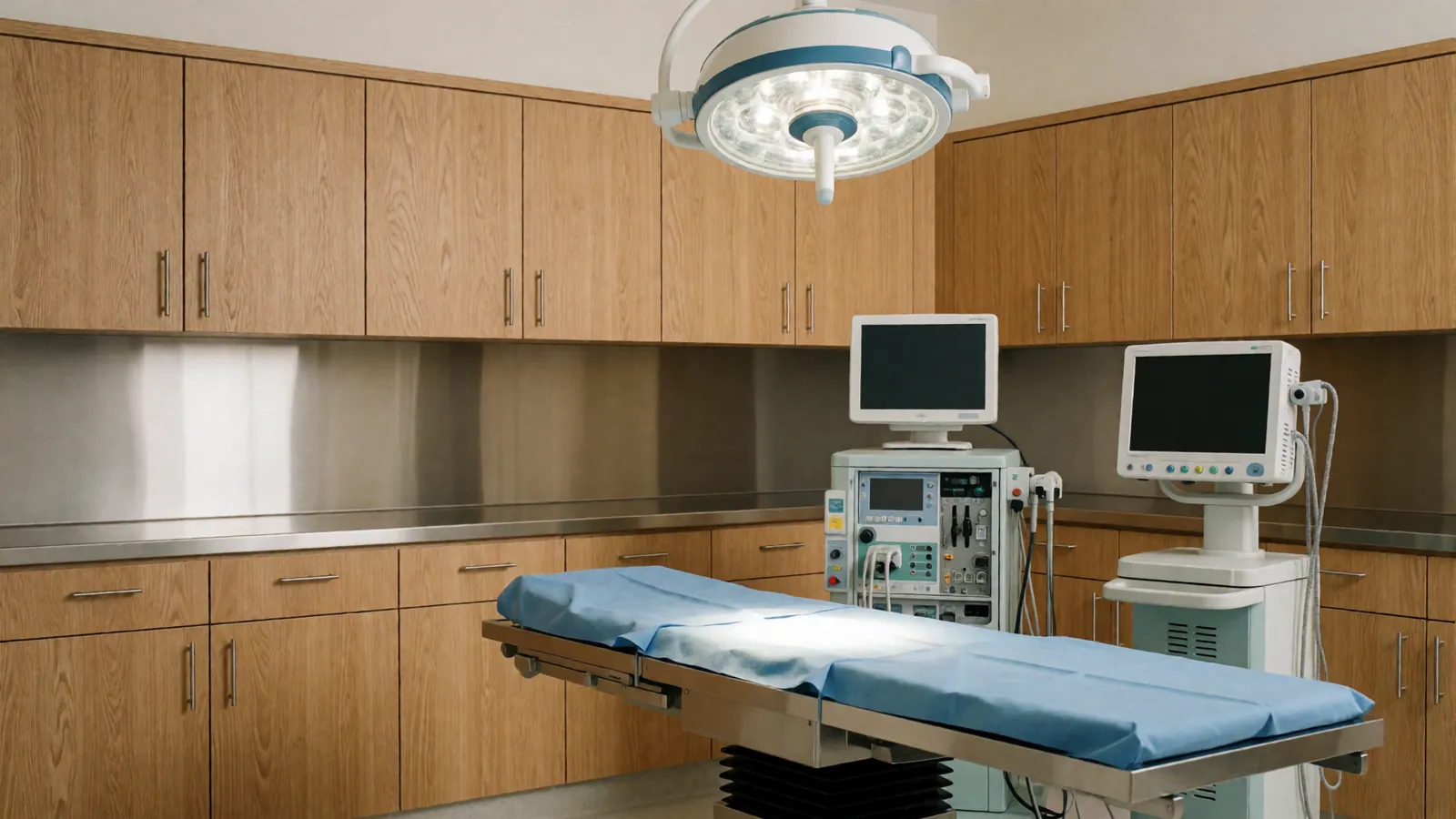
Carried out in one of our two surgical theatres — see /facility.html — used for nothing else, with the same multiparameter monitoring regardless of whether the patient is a cat neuter or a larger dog spay. Sterile technique and instrumentation are identical across every procedure that happens in that room. A neuter is typically the quicker of the two procedures; a spay takes longer because it is internal abdominal surgery rather than an external one, which is part of why the two are priced differently.
Recovery and going home
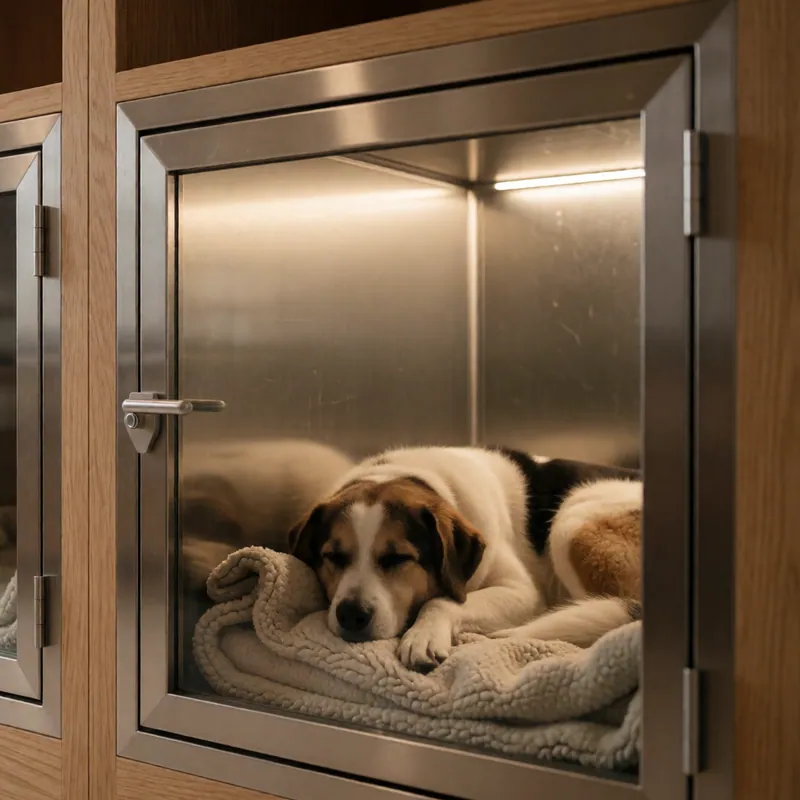
Watched continuously in the recovery ward on a heated bed until your animal is stable, alert and comfortable enough to go home. Cats and smaller dogs are typically collected the same afternoon; a larger dog, particularly after a spay, more often stays with us overnight for observation. Either way, you are told which to expect before the day of surgery, not left waiting for a phone call to find out whether your evening plans need to change.
The check-up, already booked for you
You leave with the free post-operative check already scheduled, written pain relief instructions, and a named person to call if anything about the incision concerns you before that appointment. Most recoveries are entirely uneventful, and the check exists to confirm that rather than to catch a surprise. Booking it before you leave means one less thing to remember during a week when your attention is on keeping a recovering animal calm and quiet rather than on a calendar.
Spay & Neuter in western Queens
Cat and dog spay and neuter surgery priced by weight and species, timed to your particular animal's breed and size rather than a fixed age, with anaesthetic monitoring, pain relief to go home and the post-operative check all included.
It starts the same way whatever you are here for: a full examination with time to talk, what we found explained in plain English, and a written estimate for anything beyond the consultation before it happens. You are entitled to take that estimate away and think about it, and to ask what happens if you do nothing. That last one is a real question and it gets a real answer.
This is general information, not veterinary advice. This page describes a service. It is general information and it is not veterinary advice, a diagnosis or a treatment plan for any particular animal, because no page can examine your pet. If your animal is unwell, injured or behaving unusually, speak to a licensed veterinarian who can actually see it. In an emergency contact your own veterinarian or a 24-hour emergency animal hospital immediately.
Questions
Spay & Neuter — the questions we are asked most
How much does it cost to spay or neuter a cat or dog in Woodside, NY?
A cat neuter is $225 and a cat spay is $395. A dog neuter runs $395 to $650 and a dog spay runs $495 to $850, priced by weight because a small terrier and a large breed are genuinely different amounts of surgical time and anaesthetic. Every price includes the anaesthetic, continuous monitoring, pain relief to take home and the post-operative check — call with your dog's breed and weight for the exact figure.
What age should I neuter my dog?
It depends far more on breed and expected adult size than on a fixed age. Small and medium dogs are commonly ready from around six months, while large and giant breeds are often better served waiting longer, because they are still developing through a longer growth period. We will talk through the right timing for your specific dog at a consultation rather than apply one age to every breed.
What age should I spay or neuter my cat?
Most cats are neutered or spayed from around five to six months, ideally before a female cat's first heat, which can complicate the surgery and carries its own health considerations over a cat's lifetime. Timing is more consistent across cats than across dog breeds, but we will still confirm the right window for your particular kitten at a wellness visit.
Is spay and neuter surgery safe for my pet?
It is a routine procedure carried out in a dedicated surgical theatre with continuous multiparameter monitoring and active warming throughout, and a pre-operative examination on the morning of surgery to confirm nothing has changed. As with any anaesthetic, there is always some risk, and we will discuss your specific animal's health honestly with you before the day rather than treat every patient as identical.
Will my pet be in pain after being spayed or neutered?
Pain relief goes home with every patient as standard, along with clear written instructions, and it is included in the price rather than an optional extra. Most animals are noticeably more comfortable within a day or two, and the free post-operative check seven to ten days later confirms the incision is healing as expected. If anything looks worse rather than better, or your animal seems more uncomfortable than the written instructions describe as normal, call us rather than wait for that appointment.
How long does my dog or cat need to stay with you after surgery?
Cats and smaller dogs are usually collected the same afternoon. Larger dogs, particularly after a spay, more often stay with us overnight for observation in the recovery ward before going home the following morning. We will tell you which to expect for your specific animal before the day of surgery, not as a surprise at collection.
Why is a dog spay or neuter priced as a range instead of one flat number?
Because the surgery genuinely differs by weight — a small terrier and a large breed dog need different amounts of anaesthetic drug, suture material and surgical time, and pricing them identically would either overcharge the small dog or undercharge the large one. We weigh your dog and confirm the exact figure within that range before you book, so there is no surprise on the day.
Is a post-operative check included, or is that extra?
It is included in the original price, not billed separately. We see every spay and neuter patient again seven to ten days after surgery to check the incision and confirm healing is on track, and that appointment is already booked for you before you take your animal home. If you notice anything that concerns you before that date arrives, call rather than wait, and we will bring the appointment forward or see you the same day.
Related
Usually booked alongside this
Surgery & Dentistry
Dental Cleaning
Full-mouth digital dental radiographs before every scale and polish, because the disease that actually matters sits below the gum line where an examination alone cannot see it. From $75 for the dental examination and estimate.
Read more
Surgery & Dentistry
Extractions & Oral Surgery
Simple and surgical extractions priced and explained before anything is removed, feline resorptive lesions found on radiograph rather than guessed at, and the plain truth that most animals eat better once a painful tooth is gone.
Read more
Surgery & Dentistry
Soft Tissue Surgery
Lump removal and wound repair carried out here, with an honest line drawn at what genuinely needs a referral practice, a written estimate before anything goes to theatre, and histopathology sent on every mass we remove.
Read moreA written estimate before anything is booked
Book an appointment
We hold same-day appointments back on every single day of the week for animals that were well yesterday. Call the practice and describe what you have noticed, and the desk will book you at the right speed rather than the soonest one.